
In Japan: The KonMari Retreat Begins
Explore the map to see where the journey took place, or use the links below for a specific adventure.
Tō-ji Temple - Ryosoku-in Temple - Heian Jingu Shrine - Shimogamo Saryo
Part of the A Joyful Journey to Japan series
A Quiet Day Before the Retreat
The day before the KonMari retreat began, I took myself on a solo adventure date through Kyoto.
I would soon be meeting thirty professional organizers from around the world and spending a week together: traveling, learning, and enjoying meals together.
That prospect was exciting.
It was also a lot for an introvert.
I decided to treat myself to a solo adventure, focused on emergency preparedness training and enjoying some intuitive wandering.
That was how I came across Tō-ji.
An Enchanting Encounter with Tō-ji Temple
Tō-ji Temple
I came across the temple by chance.
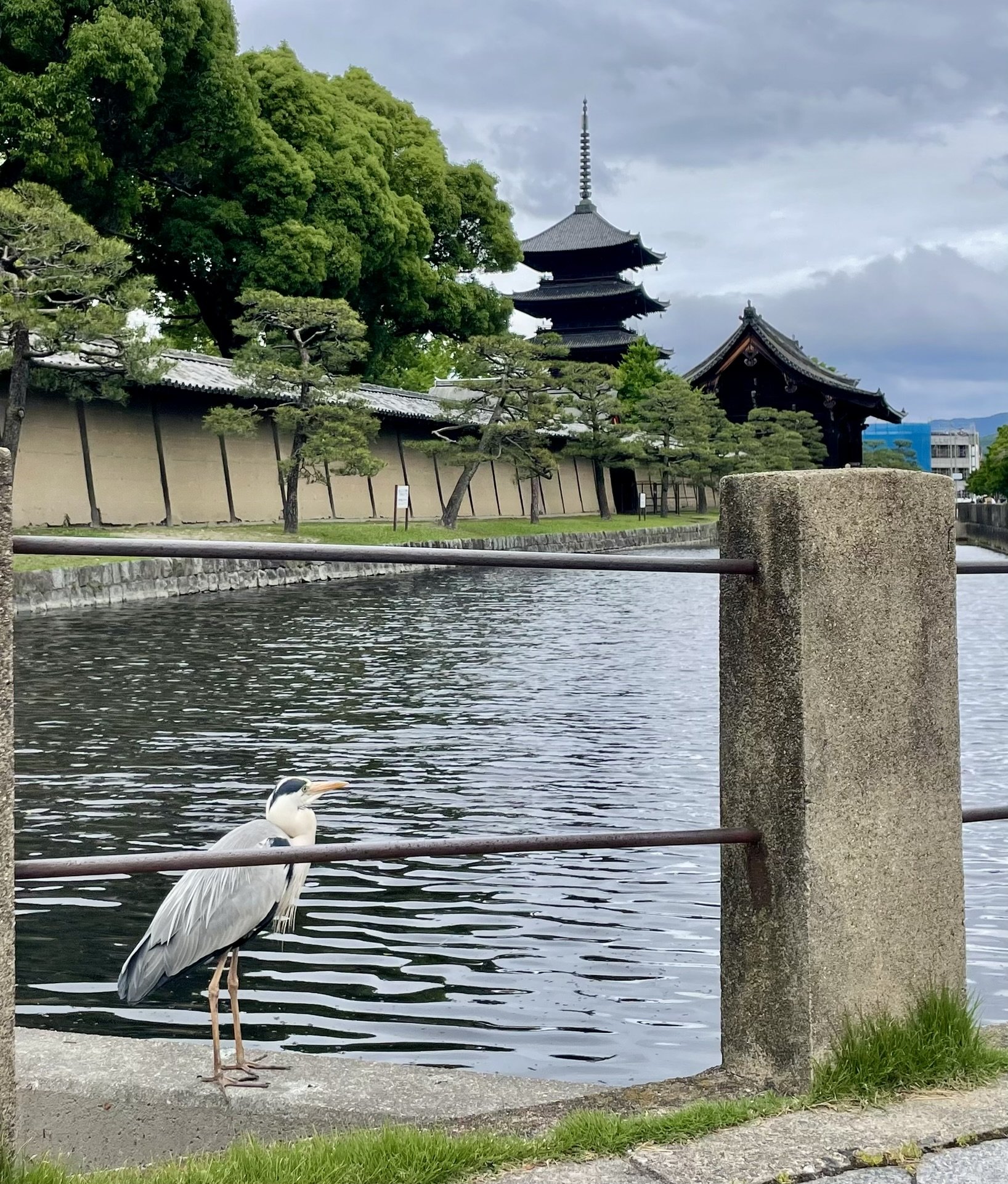
Its five-story pagoda rose above the surrounding city and drew me toward the grounds. The building seemed etched out of a century’s old history book, as a cormorant, unbothered by my interest, searched for his future lunch.
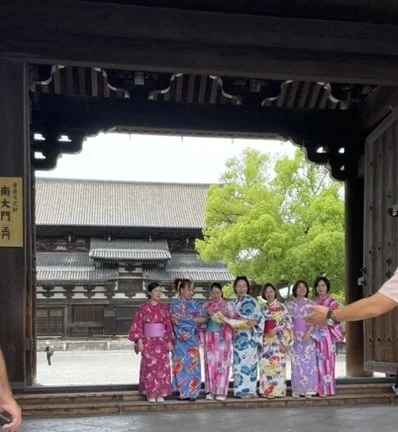
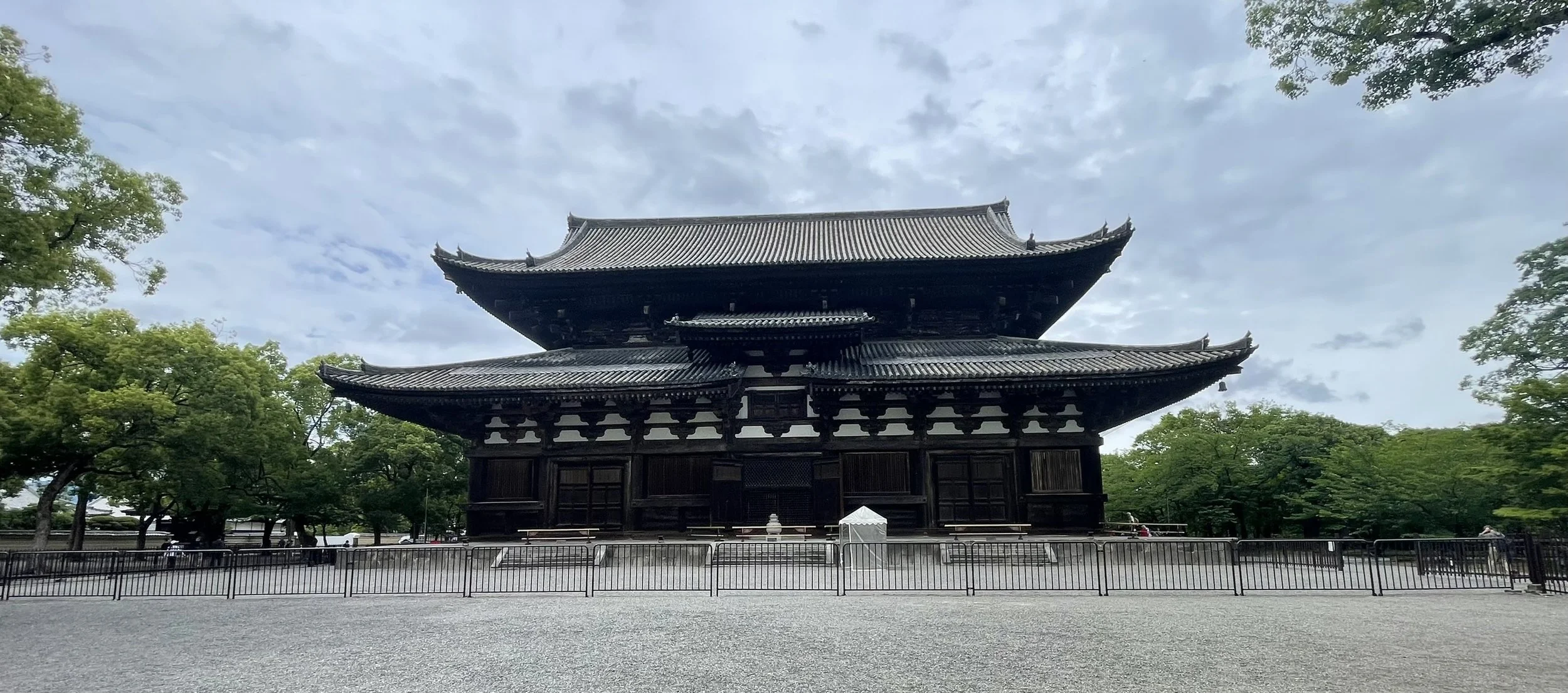
I wandered slowly through the spacious grounds, taking in the pagoda, wooden halls, water, and quiet landscape.
Inside the temple, I was captivated. I must have sat there for an hour in silence, absorbing the sights, the scent of incense, and the sound of coins striking the ancient wooden offering box. Phones were not allowed and the air itself seemed charged. The space commanded awe.
It was there that I began to understand what a bodhisattva was—not simply another word for Buddha, but a being committed to awakening while helping others along the way.
I was moved by the idea of compassion embodied through service.
Tō-ji Temple
As professional organizers, we routinely bear witness as people encounter their lives through their possessions. We support them in making emotional decisions tied to physical objects, identifying and cherishing what supports them in their next chapter, and moving toward a more whole version of themselves as a result.
Thinking about the kind of people drawn to that work made me newly excited to meet the other organizers.
The quiet had done its magic.
I was energized to embrace and enter the community.
The KonMari Retreat Begins
The retreat began in Kyoto, where organizers from more than ten countries gathered for several days of learning, reflection, cultural experiences, and connection. Some participants already knew one another through the 2024 retreat. Others, like me, were meeting for the first time.
We came from different countries, cultures, and professional backgrounds, but we shared something meaningful: each of us had been shaped by the KonMari Method®, by a belief that our homes support the lives we are trying to create, and an interest to support others in creating environments that support them. I was delighted to find the group warm, welcoming, and full of curiosity and heart.
Beginning in Stillness, and Getting Smacked by a Monk
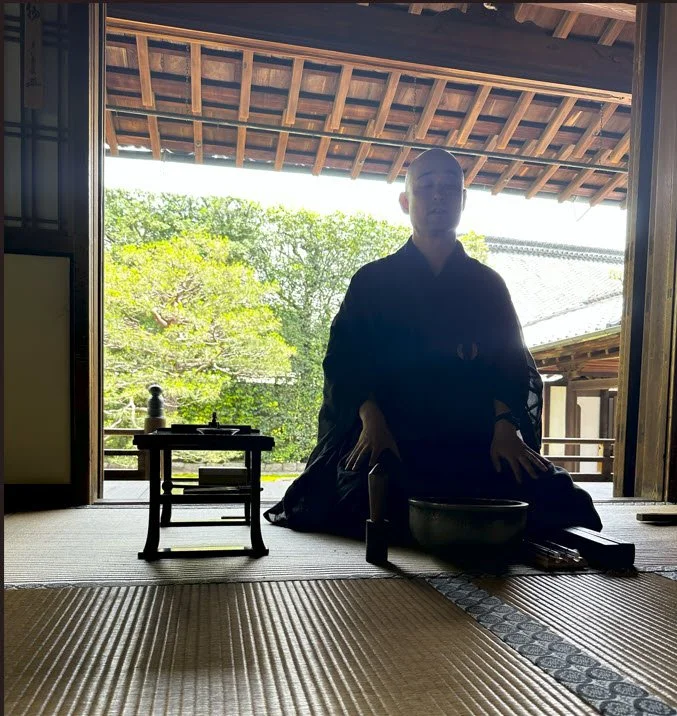
Our first retreat experience was zazen meditation at Ryosoku-in, a Zen Buddhist temple in Kyoto. After the intensity of the trip thus far, beginning in stillness felt deeply welcome.
As someone who meditates regularly, it was nice to get back into the familiar rythym:
Ryosoku-in Temple
Sit.
Breathe.
Notice.
Return.
Practicing zazen inside a centuries-old Kyoto temple, surrounded by new friends from around the world, gave that familiar stillness an entirely different quality.
Our teacher was the fourteenth generation of his family to care for Ryosoku-in. He wore beautiful, black flowing robes with enormous sleeves that moved with him as he walked through the temple.
He looked rooted in another era, yet the way he spoke about his work was strikingly modern.
He talked about his efforts of making Zen practice meaningful and accessible in contemporary life and why he believed it an important endeavor. I remember smiling as he described his daily podcast as a spiritual practice—an idea that I loved.
Tradition, in his view, did not have to remain fixed in its original form to stay sincere. A modern practice could still be approached with discipline, presence, and care.
Then came the meditation stick.
I learned that afternoon that in zazen, participants can bow to request a firm strike across the shoulders to help bring your mind back to your body. Many people chose to participate, filling the meditation room with the sound of repeated whacks that got progressively louder as the monk got ever closer to my seated position.
Then it was my moment.
I heard the monk’s bare feet approaching.
And I bowed.
I remember seeing his beautiful sleeves shift upward, and then I felt myself being smacked on either shoulder by a Zen monk.
It was ceremonial, startling, and unexpectedly energizing. I will say that there are few things quite as effective at sharpening your awareness of the present moment.
Sitting in meditation, I recognized how powerful it was to be beginning the retreat by sharing silence. Before anything else, we were allowed space to arrive, not only geographically, but inwardly, and together.
A Temple Passed Forward
Ryosoku-in Temple
The monk spoke about the responsibility of inheriting a temple entrusted to his family for fourteen generations. He explained that he was not merely preserving a building, but rather, caring for a living tradition while finding new ways for it to remain relevant.
The balance of honoring what came before while allowing it to evolve would surface repeatedly throughout my time in Japan.
The Art of Maintaining What Matters
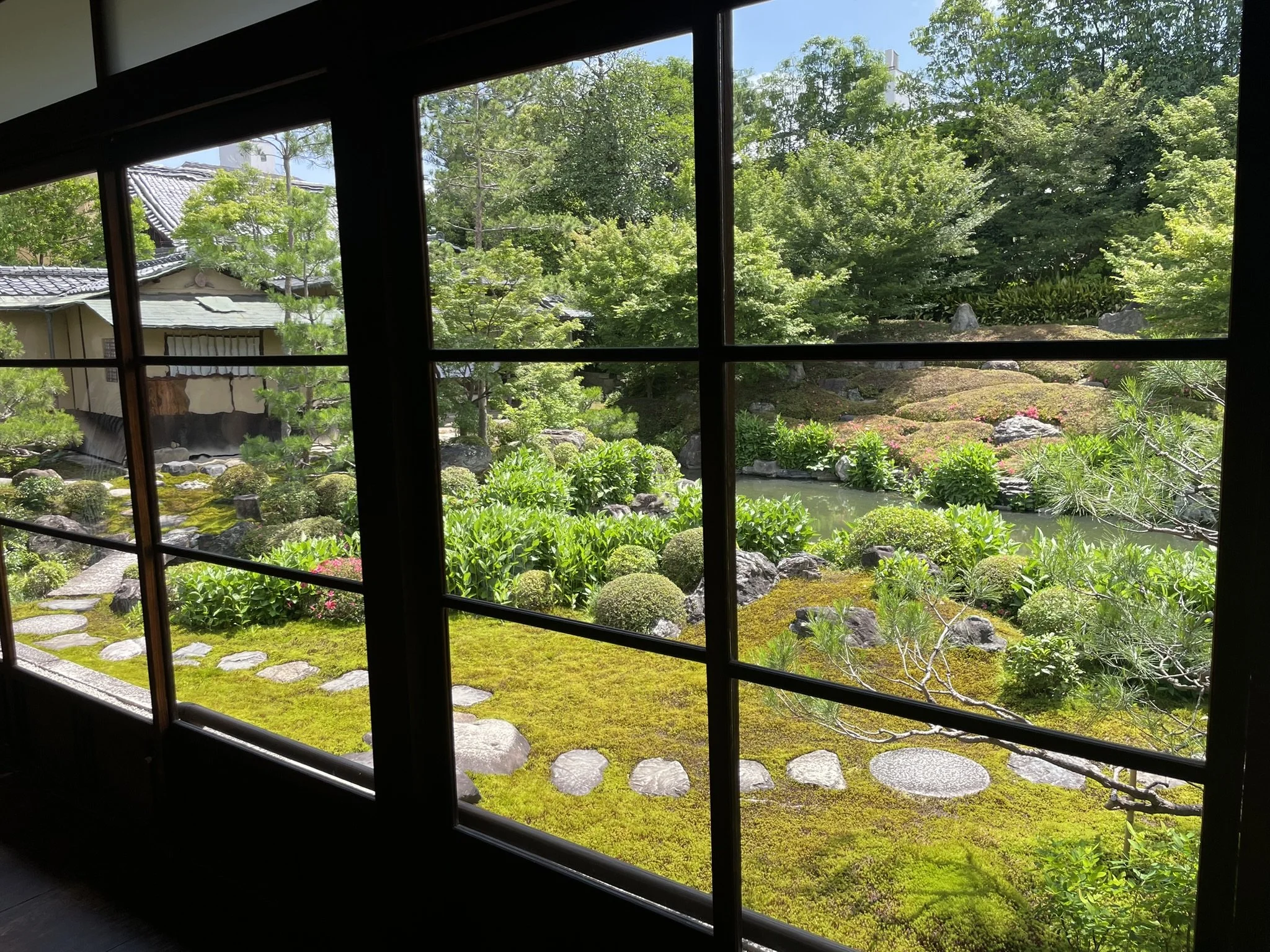
I was stunned when, after being asked how he maintained the temple and its grounds, the monk shared that the gardens had not been redesigned in hundreds of years.
The gardens had simply been maintained. For hundreds of years.
I felt a near sense of disbelief.
In western culture, we often assume that improvement requires transformation: a renovation, reinvention, or entirely new system.
Yet, these gardens remained beautiful because generation after generation continued caring for what was already there.
My favorite discussion was around the chores of a monk. He employed a wonderfully simple principle: when he noticed something small that would improve the space, he took care of it immediately.
He did not wait for his official weekly maintenance day or allow a minor issue to become a larger one.
He noticed—and responded. I found this deeply compelling.
A supportive home is rarely created through one heroic burst of effort and then preserved without attention. It is sustained through small acts of noticing:
Putting something away while it is still in your hand.
Wiping a spill before it hardens.
Addressing a small frustration before it becomes part of the background noise of daily life.
The temple and its’ garden had endured for centuries because care was not treated as a one-time event.
It was a practice.
From a Zen Temple to a Shinto Shrine
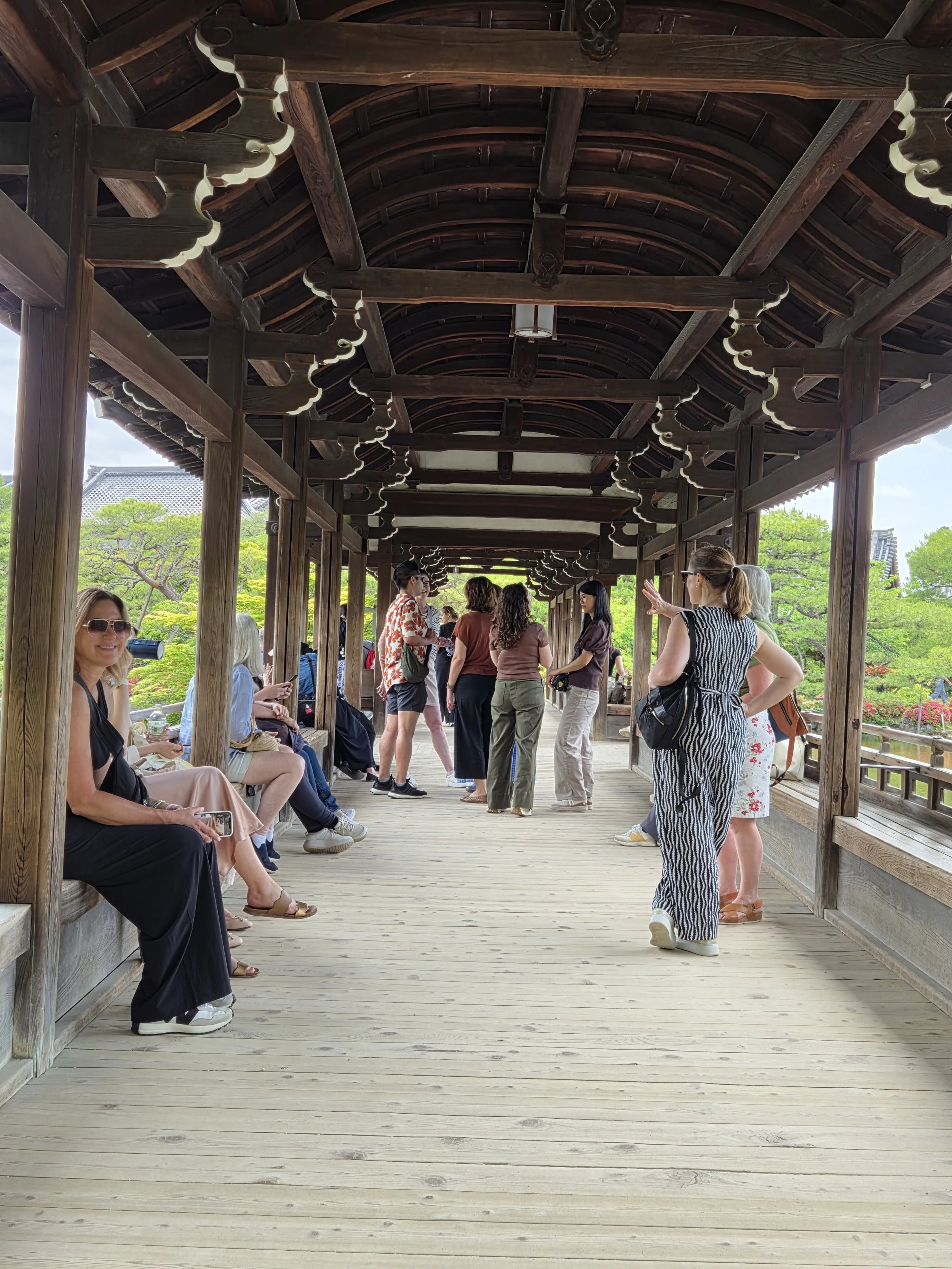
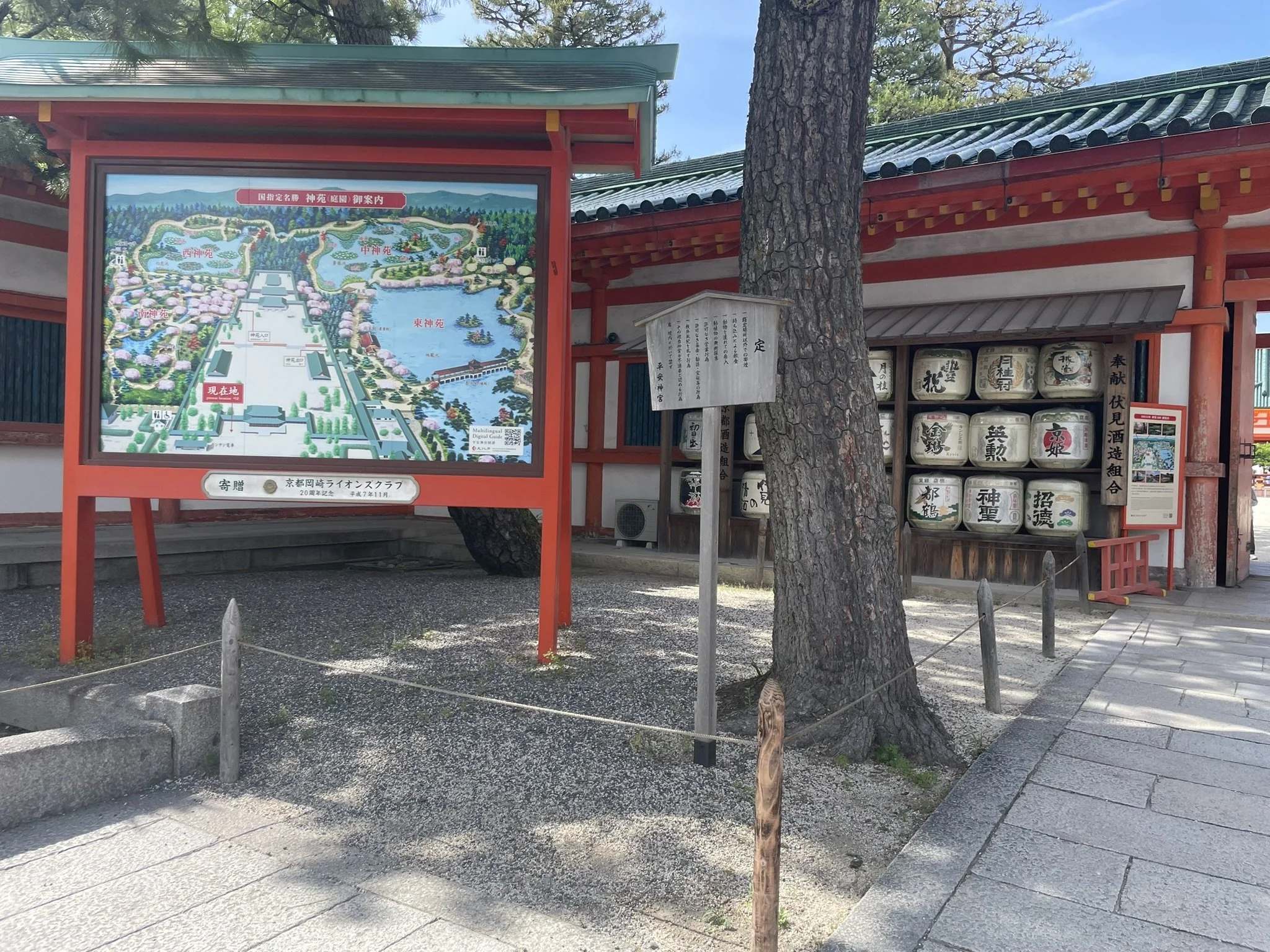
After beginning the day at Ryosoku-in, a Zen Buddhist temple, we continued to Heian Jingu, a Shinto shrine.
Heian Jingu Shrine
Before traveling to Japan, I did not fully understand the distinction between Buddhist temples and Shinto shrines. Visiting both in the same day provided an intriguing glimpse of these two spiritual traditions that shape Japanese culture.
Buddhism includes teachings and practices connected with awakening, compassion, and liberation from suffering.
Shinto centers on reverence for kami—the sacred presence associated with nature, places, ancestors, and forces of life.
Meeting these traditions in Japan side-by-side prompted appreciation and curiosity, and I tried to take in the feelings and experiences that each provided.
Ryosoku-in had invited us inward through silence, meditation, and attention.
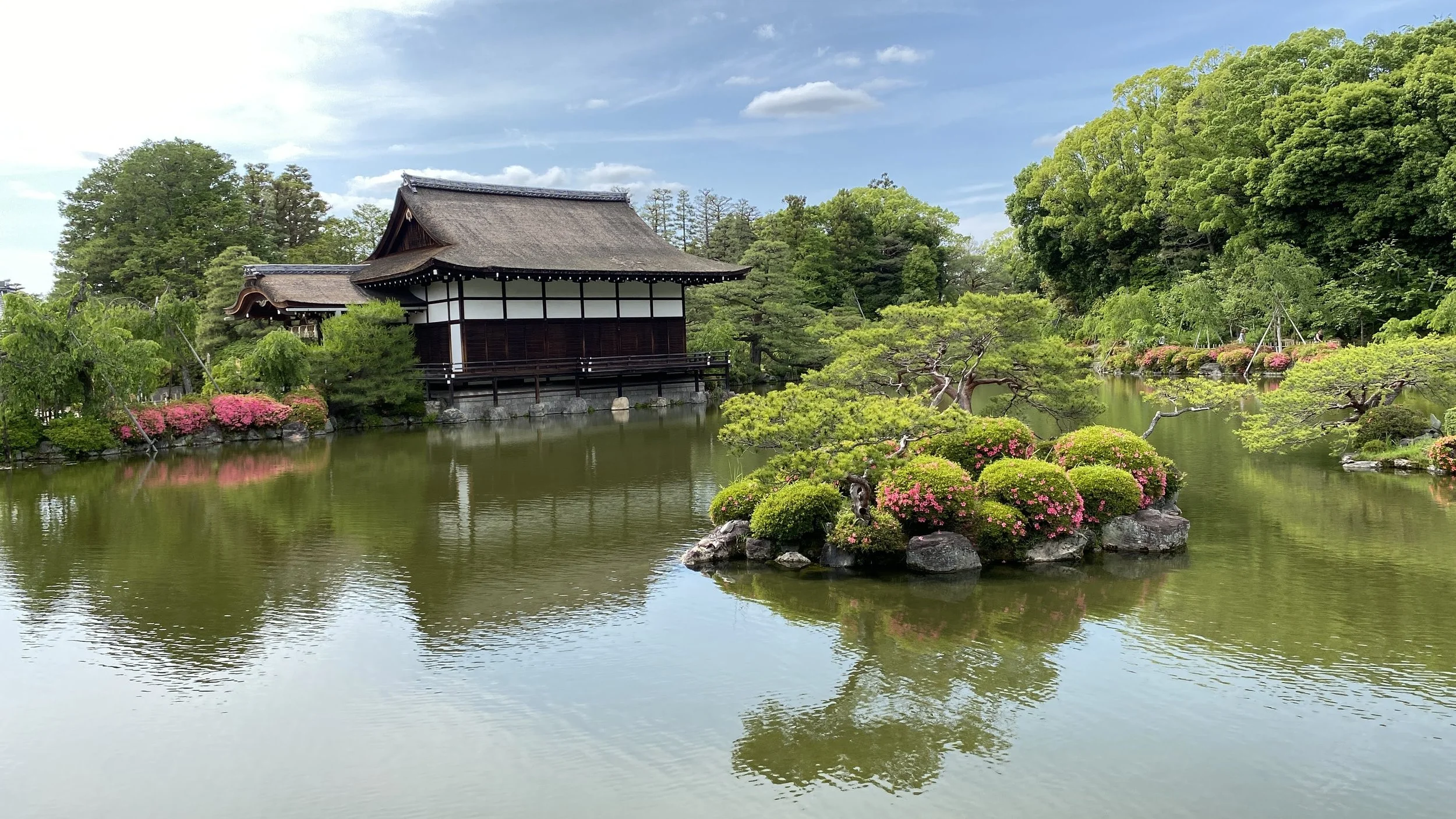
Heian Jingu and its Shin-en Gardens opened outward through vivid architecture, expansive grounds, water, pathways, and seasonal beauty.
Gardens That Shape How We Feel
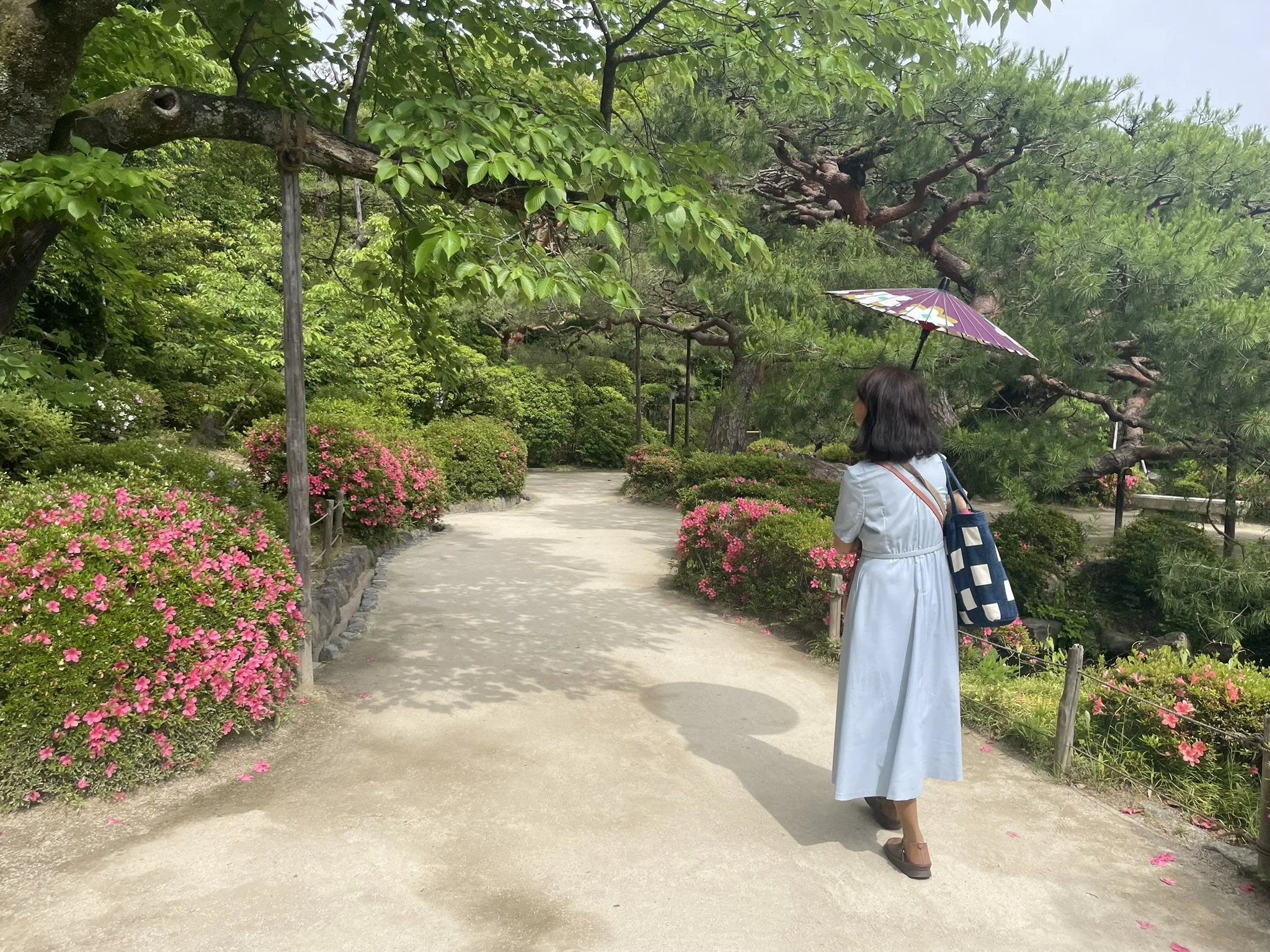
There was something at once magnificent and personal about Shin-en Gardens, in how the architecture, water, pathways, and plantings worked together to shape the experience of moving through the grounds.
The garden did not demand attention through spectacle.
Rather, it guided it.
A path curved just enough to conceal what came next. A bridge composed of giant hopping stones changed our perspective. Water reflected the landscape and stunning architecture, slowing the eye. Plants selected to bloom at different times ensured that the garden would offer beauty throughout the year.
As someone who spends much of my career thinking spatially, I found this fascinating.
Places are never neutral.
The arrangement of a room influences how we move through it. A clear pathway can create ease. A crowded surface can quietly increase tension. The placement of a chair can encourage conversation—or discourage it.
Gardens can do the same thing: invite us to slow down, look outward, gather, or find a moment alone.
The transition from the Zen temple to the Shinto shrine reinforced one of the day’s larger lessons:
Attention can be cultivated in many ways.
Shin-en Gardens
Sometimes through stillness.
Sometimes through movement.
Sometimes by turning inward.
And sometimes by walking through a landscape designed to help us notice the world around us.
Meeting the International KonMari Community
As we moved between temples, gardens, and shared experiences, the retreat community began to take shape.
There is a particular energy in meeting people whose work resembles your own but unfolds in entirely different cultural contexts.
We compared experiences, asked about one another’s businesses, talked about clients and communities, and shared what had drawn us to the KonMari Method.
Some participants had been organizing professionally for years while others were brand new. Each person brought a unique experiences from different backgrounds, whether from corporate, education, global health, media, etc.
Heian Jingu Shrine
Each person had interpreted the KonMari Method through the needs of their own community and the texture of their own life.
The method gave us common ground.
Our curiosities and differences made the conversations interesting.
Connection developed through small interactions: walking beside someone between locations, helping take a photograph, laughing over a shared misunderstanding, or discovering an unexpected point of connection.
Community is rarely created through one grand moment.
It forms through accumulation.
A kind smile exchanged.
A conversation here.
A shared experience there.
A story offered and received.
I felt welcomed and seen by kind and joyful humans, a feeling that was warming from the inside out.
A Welcome Dinner at Shimogamo Saryo
Our first retreat day concluded with dinner at Shimogamo Saryo.
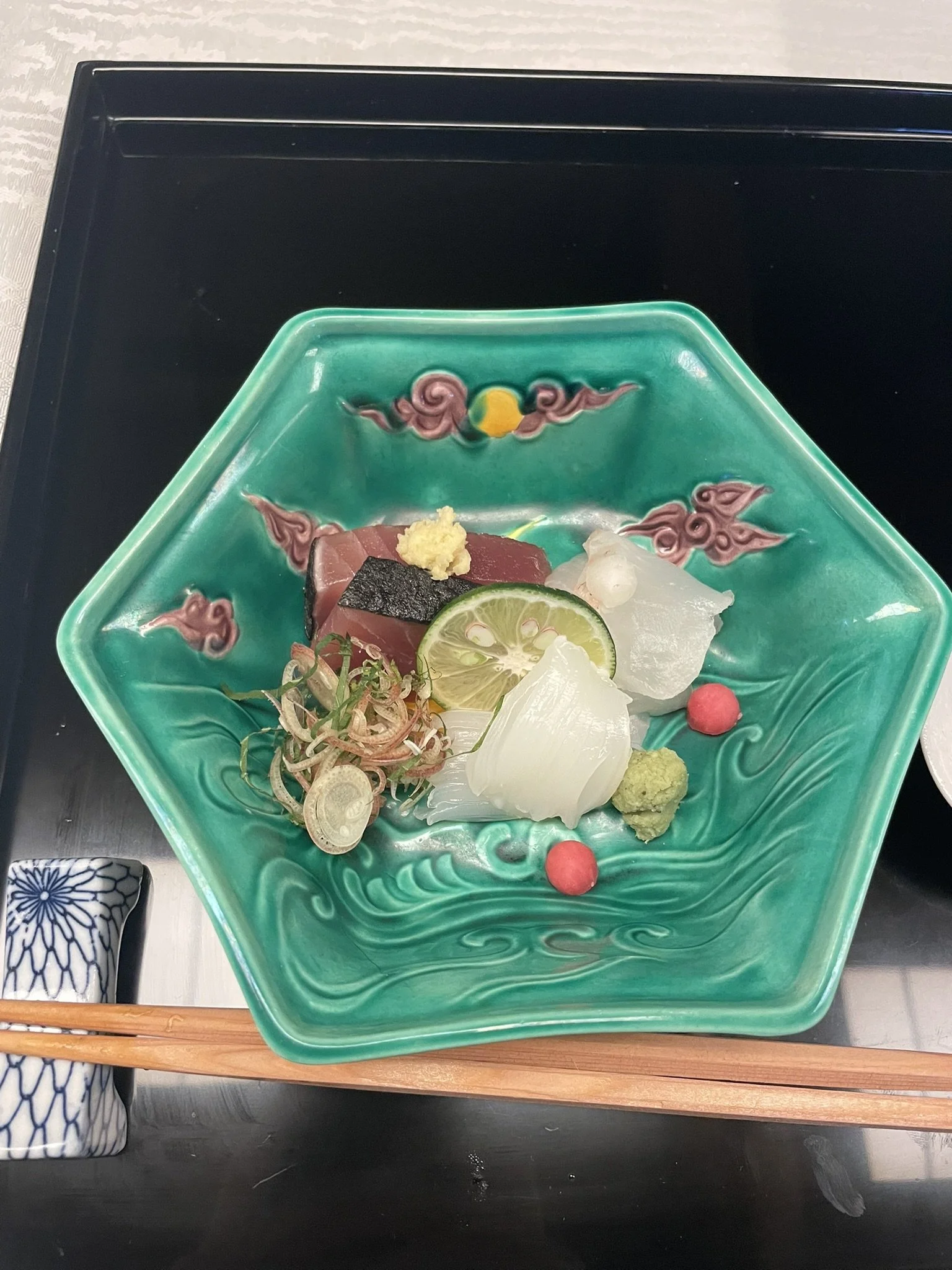
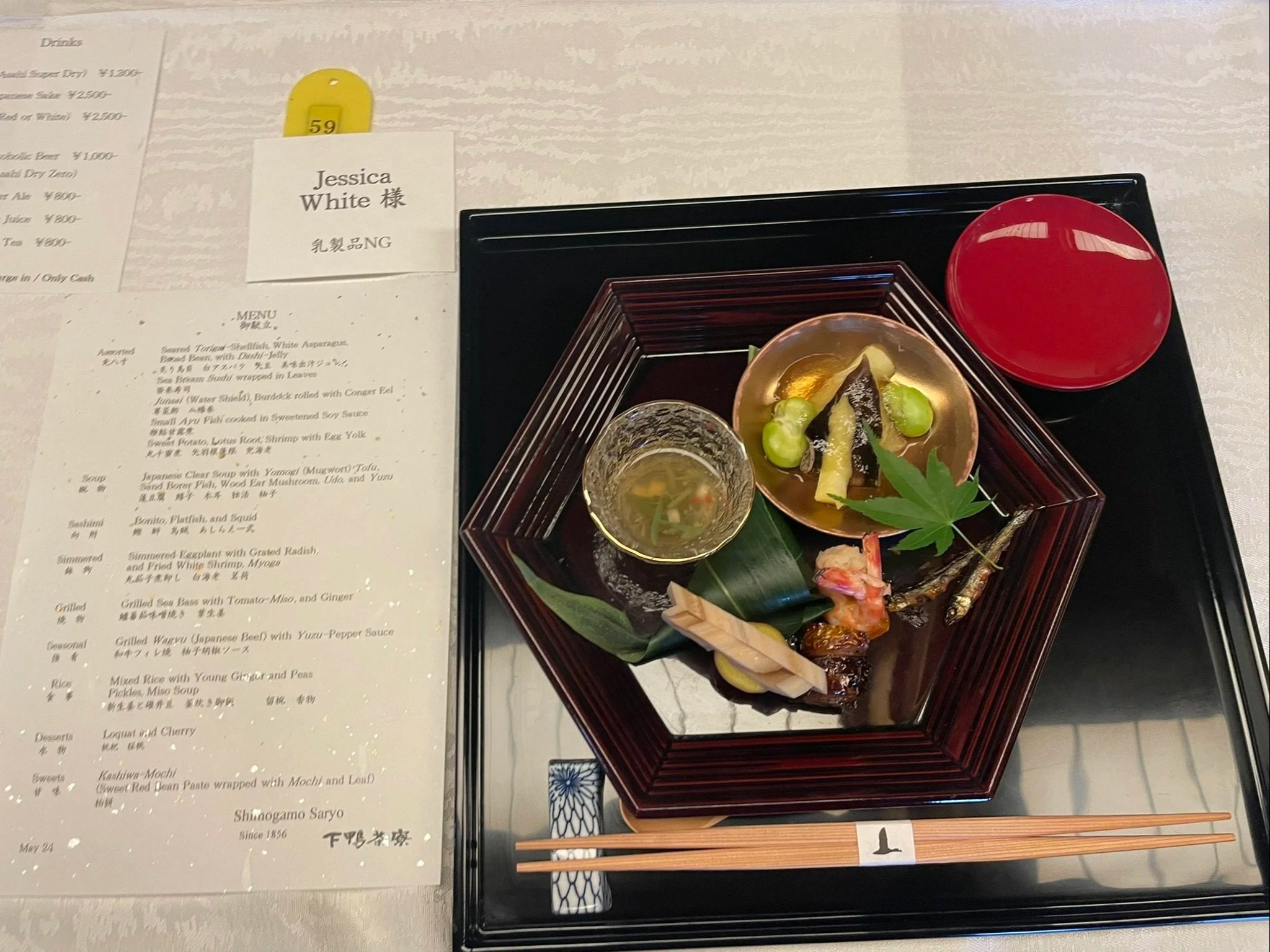
It was the first traditional Japanese meal I had ever experienced, and I was enchanted.
Shimogamo Saryo
Each dish was beautifully presented and rooted in the season. The ingredients were fresh, the portions thoughtful, and every plate seemed composed with attention to color, texture, balance, and place.
The meal unfolded slowly, inviting us to be present and savor the moment.
Until then, I had understood seasonal eating as a practical idea: choosing foods that are fresh and available at a particular time of year.
This meal showed me something deeper.
Seasonality could also be a form of awareness—a way of recognizing that this moment, this ingredient, and this particular gathering would never occur in precisely the same way again.
The food was wonderful, and the experience around the table enlivening.
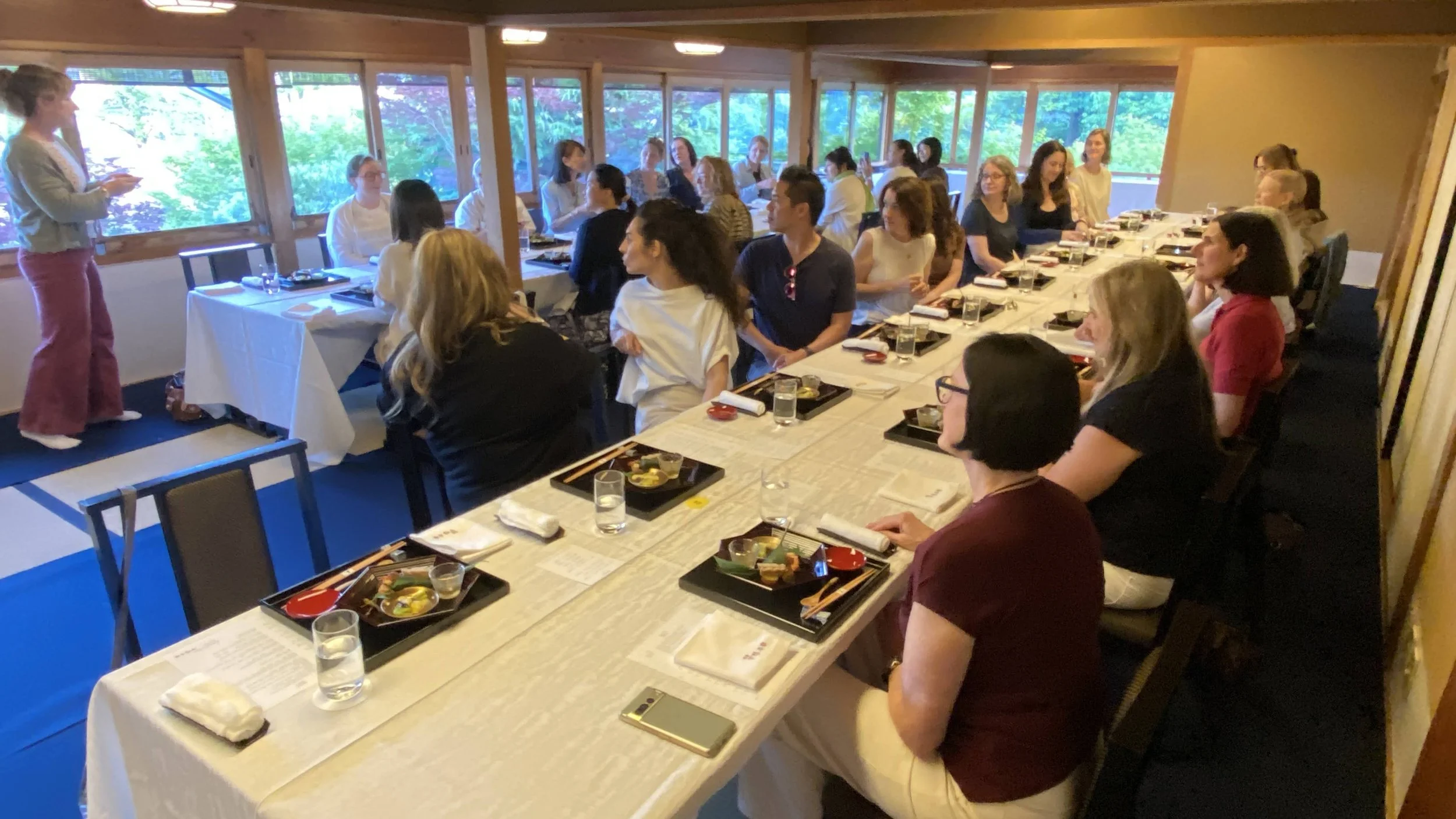
Throughout the day, our conversations had happened in flux as we moved between meditation, gardens, and unfamiliar places.
Shimogamo Saryo
Dinner allowed us to settle.
Stories began moving around the table.
Names became more familiar.
Laughter came more easily.
There is something powerful about sharing a meal with people who were strangers only hours earlier.
A shared table says:
Pause. Pay attention.
This is time to listen. This is time to share.
By the end of dinner, I did not know everyone. But the group no longer felt like thirty separate organizers who happened to be following the same itinerary.
We had begun becoming a community.
What the First Retreat Day Taught Me
I had come to Japan to deepen my understanding of the KonMari Method and the culture from which it emerged. By the end of our first retreat day, that was already happening - not through training, but through experience.
At Tō-ji, solitude prepared me to enter a community.
At Ryosoku-in, zazen invited us to begin with presence rather than performance.
The monk’s care showed me that maintenance can itself be a meaningful practice.
At Heian Jingu, the landscape demonstrated how thoughtfully designed spaces can influence the way we move, notice, and feel.
And at Shimogamo Saryo, a seasonal meal expressed beauty, attention, and care while turning a collection of individuals into a community.
These experiences shared a common thread: What we give our attention to shapes our lives.
The Retreat Had Begun
When I think back to the beginning of the retreat, I remember the monk’s flowing robes and the startling crack of the meditation stick.
I remember pathways curving through gardens that generations had tended without trying to reinvent them.
I remember thirty organizers from around the world relaxing into each others company.
And I remember my first traditional Japanese meal: seasonal, fresh, beautiful, and unlike anything I had experienced before.
The journey had already offered maximum fun, laughter, confusion, and adventure.
Now it was offering something quieter:
Presence.
Care.
Belonging.
The retreat had begun.
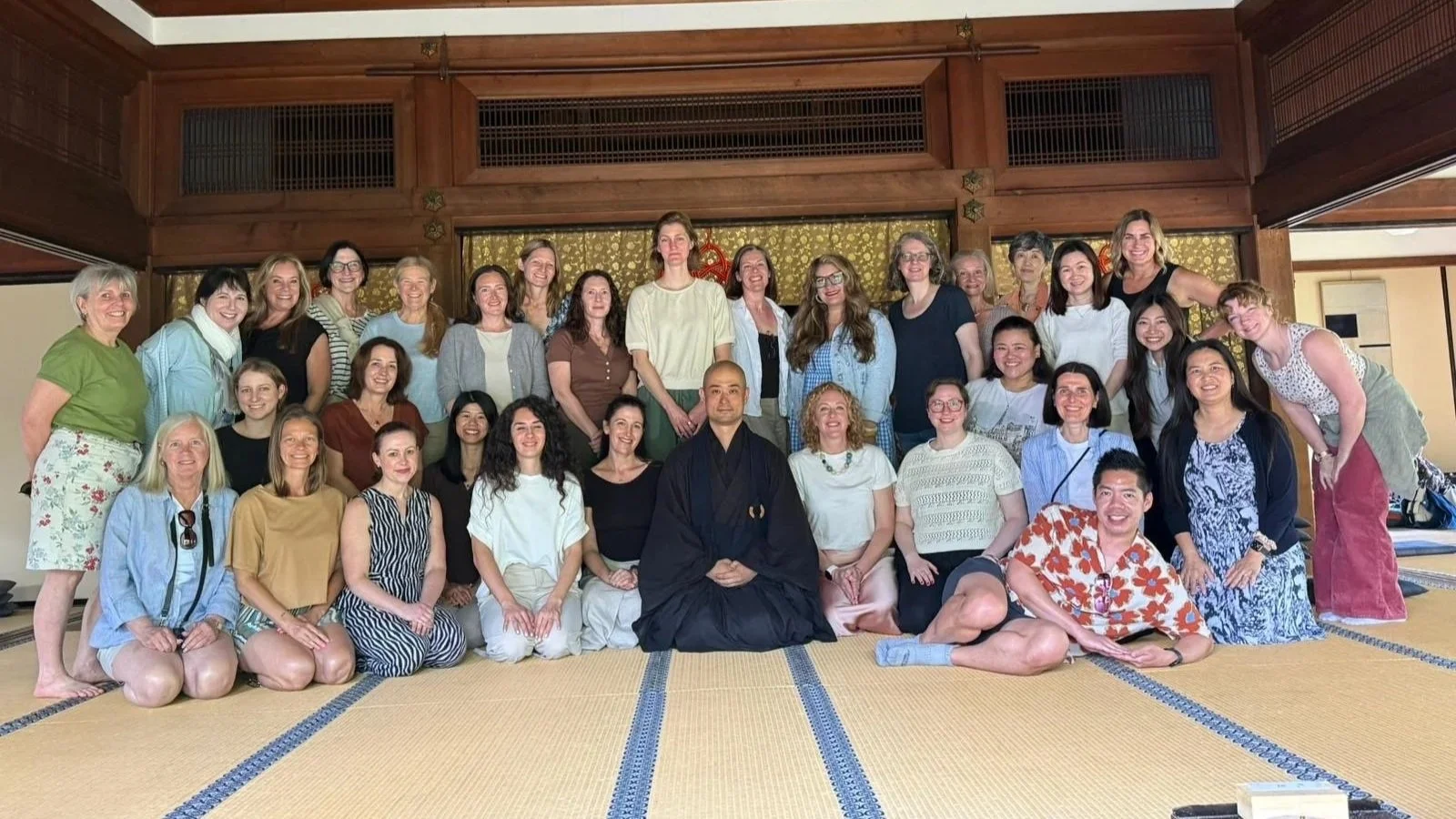
Ryosoku-in Temple
Explore More of the Journey
These are only some memories from my joyful journey through Japan. Visit the series hub to follow the route on the interactive map and explore more reflections on joy, friendship, preparedness, place, and the KonMari Method®.
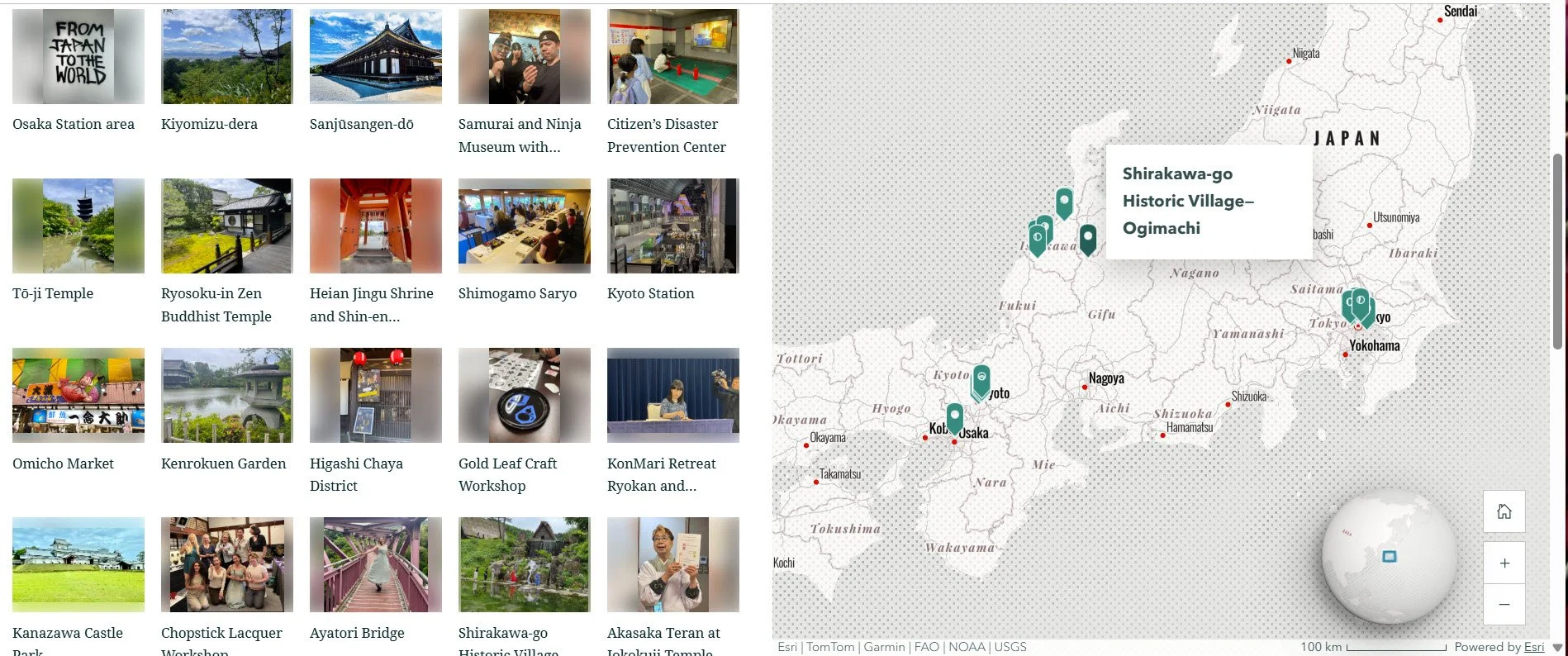
A joyful guide to Japan combining mapped places, cultural discoveries, KonMari experiences, personal stories, and practical inspiration for your own journey.