
Explore the map to see where the journey took place, or use the links below for a specific adventure.
Omicho Market - Higashi Chaya District - Retreat Ryokan
Workshop - Gold Crafts - Kenrokuen Garden
Part of the A Joyful Journey to Japan series
The Road to Kanazawa
By the time our bus pulled away from Kyoto, we were no longer simply a collection of KonMari Consultants traveling through Japan. We were becoming a community, and Kanazawa was where that solidified.
We had meditated in a centuries-old temple, explored Kyoto, and shared exquisite meals. We had found our rhythm together and were excited for what awaited us next: learning alongside Japanese KonMari Consultants, connecting with Marie Kondo, and experiencing the craft traditions for which Kanazawa is known.
Arriving in Kanazawa
Omicho Market
Our first stop was Omicho Market, a bustling food market where the sights, sounds, and smells competed for attention.
A friend and I found a restaurant tucked into a quieter corner, where heartfelt conversation accompanied an extraordinarily generous serving of salmon and ikura, or salmon roe. I adore ikura and was moved to near tears by a bowl containing both salmon and roe—the entire delicious salmon life cycle represented in one meal. I was there for it.
Higashi Chaya
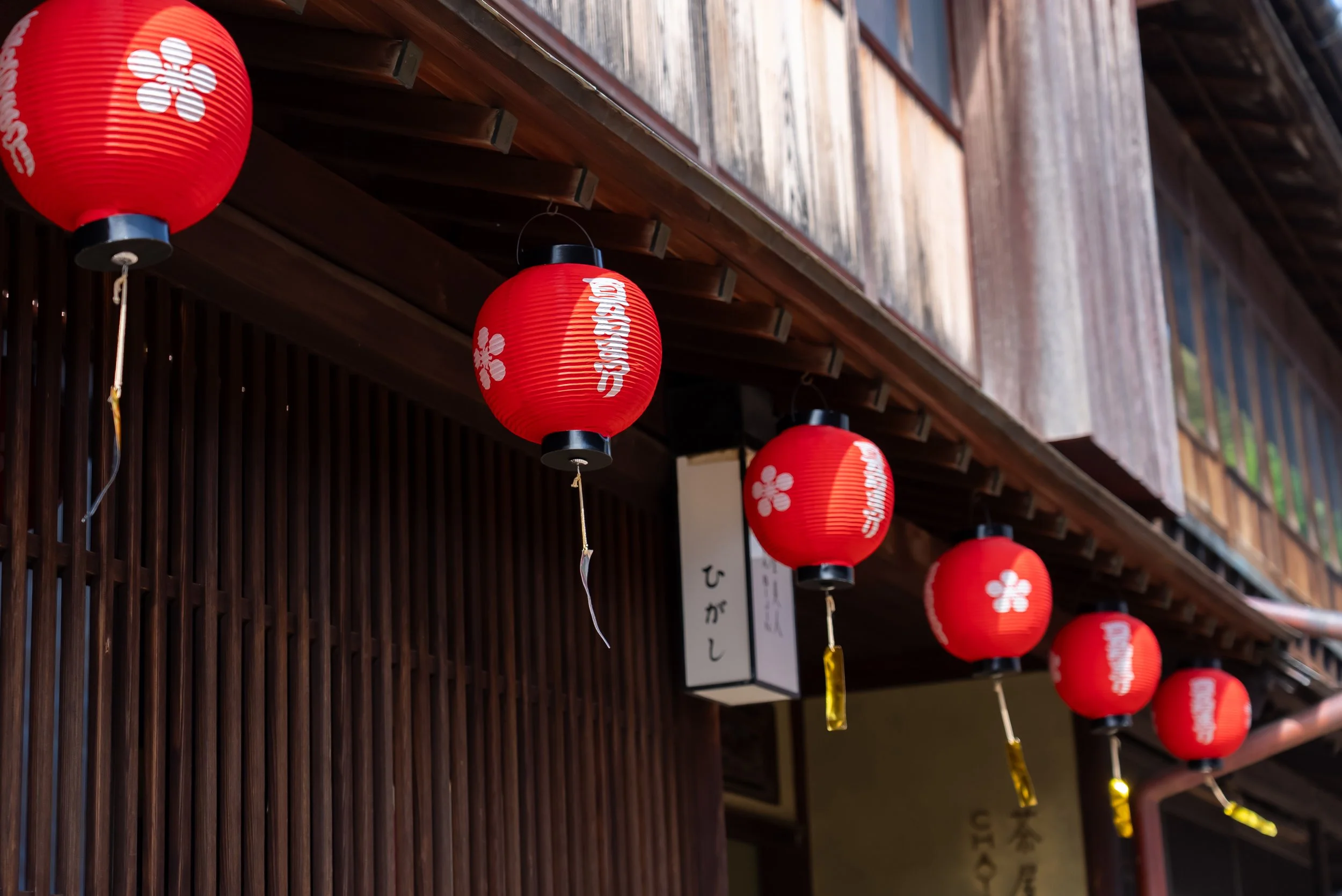
Afterward, we explored Higashi Chaya, one of Kanazawa’s historic teahouse districts. With its preserved wooden buildings and narrow streets, it felt strikingly different from the modern city around it and immediately brought the visual world of Memoirs of a Geisha to mind.
There, I enjoyed an indescribably delicious mango-flavored shaved ice so good that I felt both delighted by the experience and immediately inconvenienced by the knowledge that shaved ice could taste so good.
After the movement and stimulation of Kyoto, Kanazawa felt different. Its craft traditions, beautiful architecture, and slower pace invited closer attention.
Hatori Hotel, Kanazawa
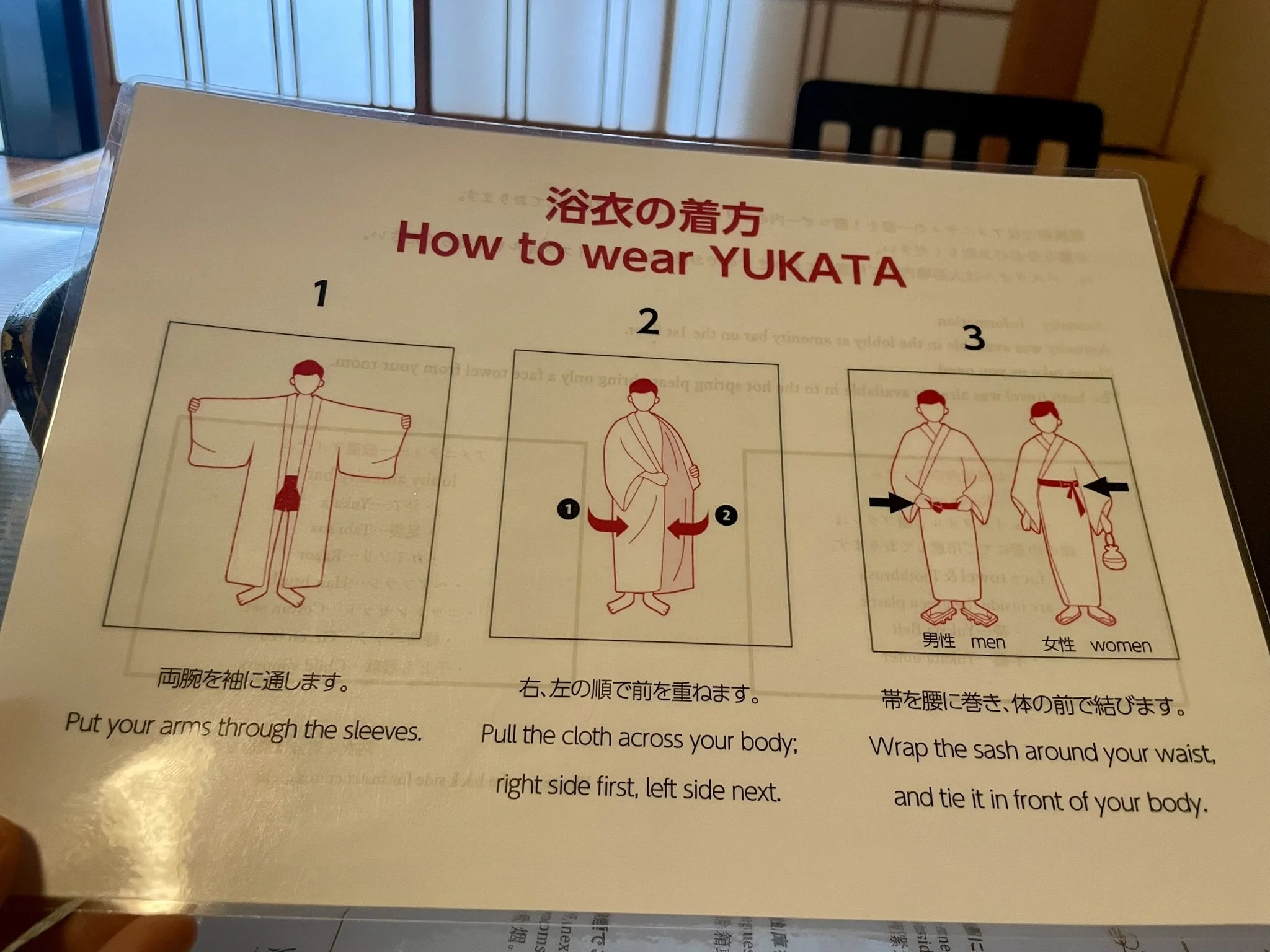
We checked into Hatori Hotel, a traditional Japanese ryokan—or inn—with tatami-mat rooms, futon bedding, yukata robes, shared meals, and extraordinarily thoughtful hospitality. Our ryokan also had natural hot-spring baths, a spa, game rooms, and a karaoke room.
I acclimated remarkably quickly to ryokan life.
The futons, however, took a little longer.
After my first night of almost no sleep, I wondered how everyone else was managing to sleep so comfortably. Then, following a sake-fueled karaoke adventure, I returned to my room and discovered additional futons tucked inside the closet.
Full on futons in the Ryokan
I excitedly told my roommate about my discovery.
She asked how many futons I intended to use.
“Have you heard the story of the princess and the pea?” was my sake-saturated reply.
With my newly elevated sleeping arrangement, I was ready to embrace ryokan life completely.
A Global Community Grows
While in Kanazawa, Japanese KonMari Consultants joined us for two days and one night, expanding our group to more than 60 organizing professionals representing different languages, cultures, and experiences of the KonMari Method.
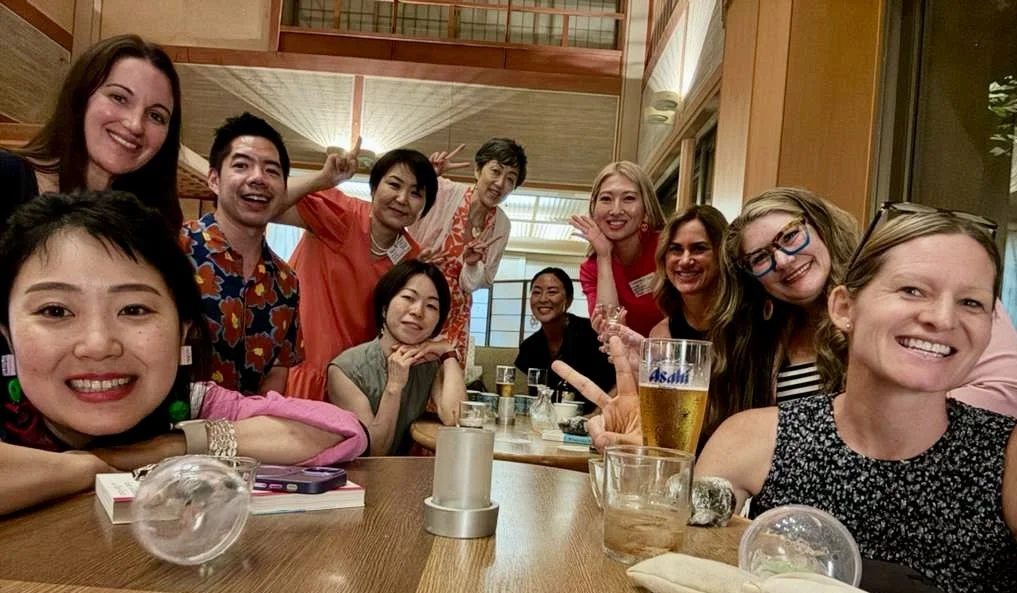
Night out with Global KonMari Consultants
Communication was not always effortless. I was happy to be reminded that connection does not need many words to be genuine.
On one bus ride, I sat beside a wonderful Japanese consultant named Jo. We talked the way long-lost friends from far-flung cultures somehow do. She read my palm, we shared many laughs, and the hour-plus journey passed remarkably quickly.
That interaction captured something I experienced repeatedly throughout the retreat: people having a genuine curiosity about one another.
We had not gathered merely because we shared a professional certification. Each of us had chosen work centered on helping people consider what matters in their homes and lives.
And now we were getting to know one another not only as consultants, but as people.
Sometimes our connections grew through meaningful conversations.
Sometimes connections grew through creativity.
And once, they grew through the greatest multilingual rock-paper-scissors tournament I have ever witnessed.
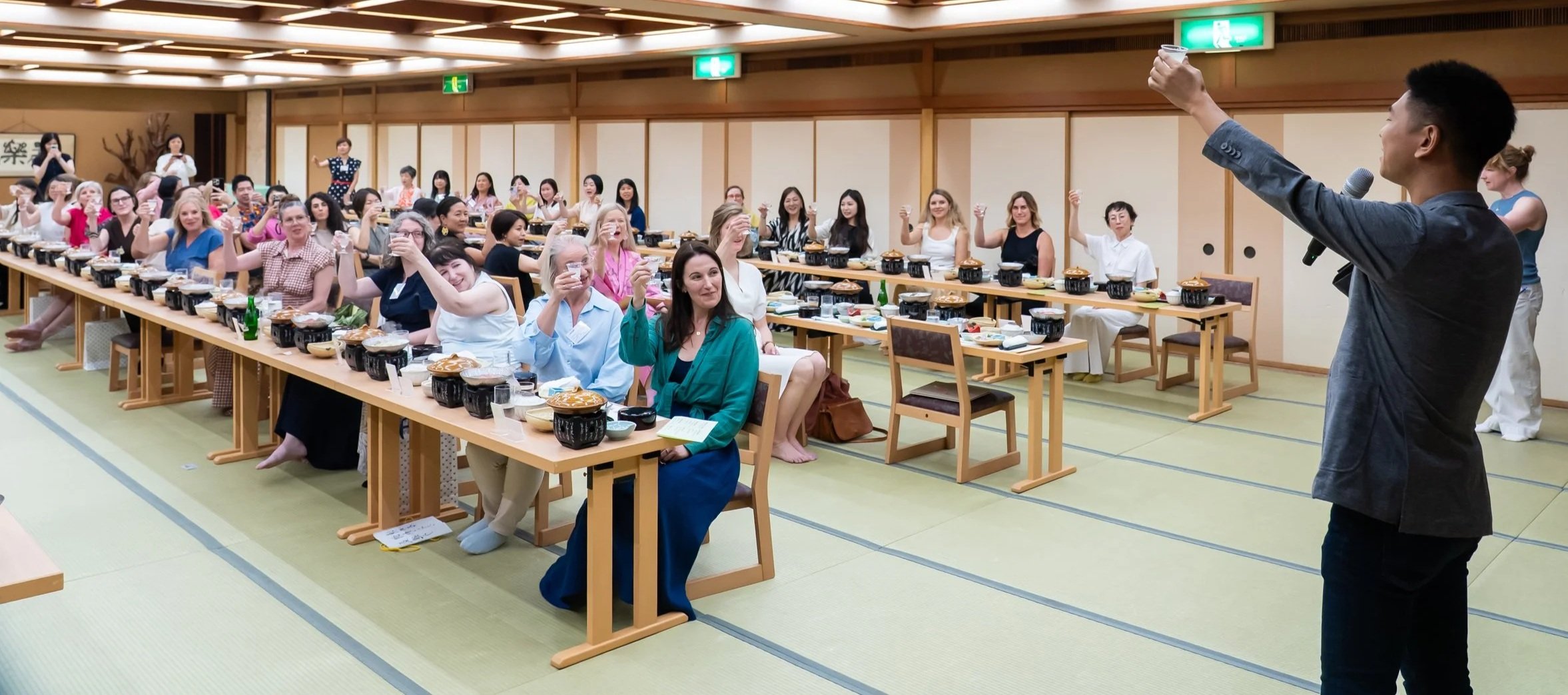
Celebratory Dinner
More than 60 adults competed across language barriers, laughing, gesturing, and cheering one another on. It was delightfully chaotic, hilarious to watch, and completely joyful.
I was eliminated in the first round. …Apparently, I scissored when I should have rocked.
We also played a game called “Who Said It: Kondo, Yoda, or Einstein?” Contestants tried to identify the source of different quotations while competing for copies of Marie’s newest book, Whispering Rooms.
It turns out that the line between KonMari wisdom, Jedi wisdom, and Einstein’s observations can be surprisingly thin.
I am proud to report that I won a copy. …Your girl knows her inspirational quotes.
A Day with Marie Kondo
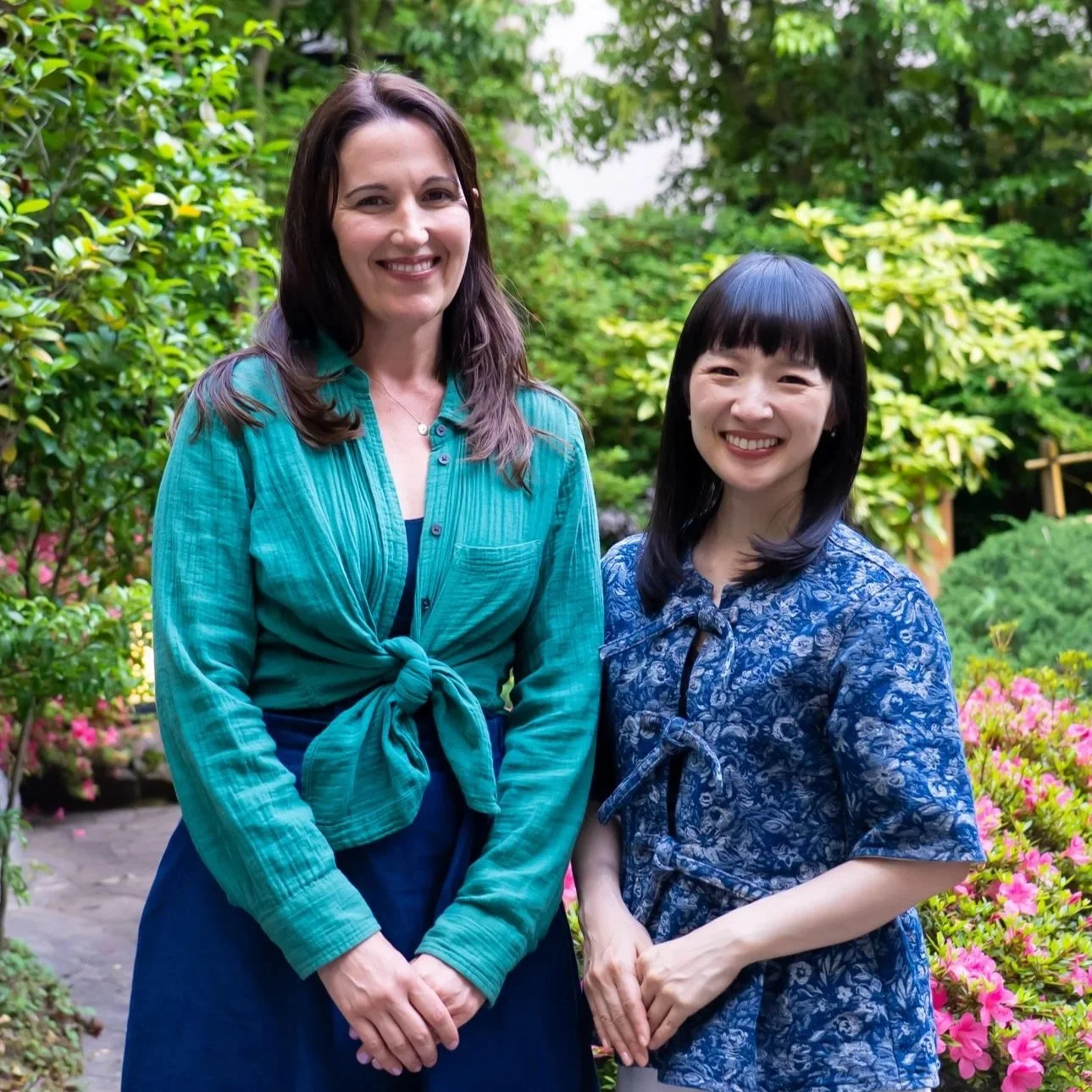
Marie Kondo and Jessica White
Workshop day was also our day with Marie Kondo.
Humble brag incoming: I have been fortunate to meet Marie several times. Even so, meeting her in Japan felt different.
I had spent the previous week experiencing some of the places, traditions, hospitality, and everyday rhythms that helped give context to work I had practiced and taught for years.
Some moments feel almost dreamlike while they are happening.
After years of practicing and teaching the KonMari Method, I was in Japan, learning alongside Marie and an international community of consultants.
Our day included workshops exploring Kurashi at Home, tokimeki, shodō calligraphy, and onigiri, along with plenty of opportunities to connect.
Making with Our Hands
Craft was woven—pun intended—throughout our time in Kanazawa.
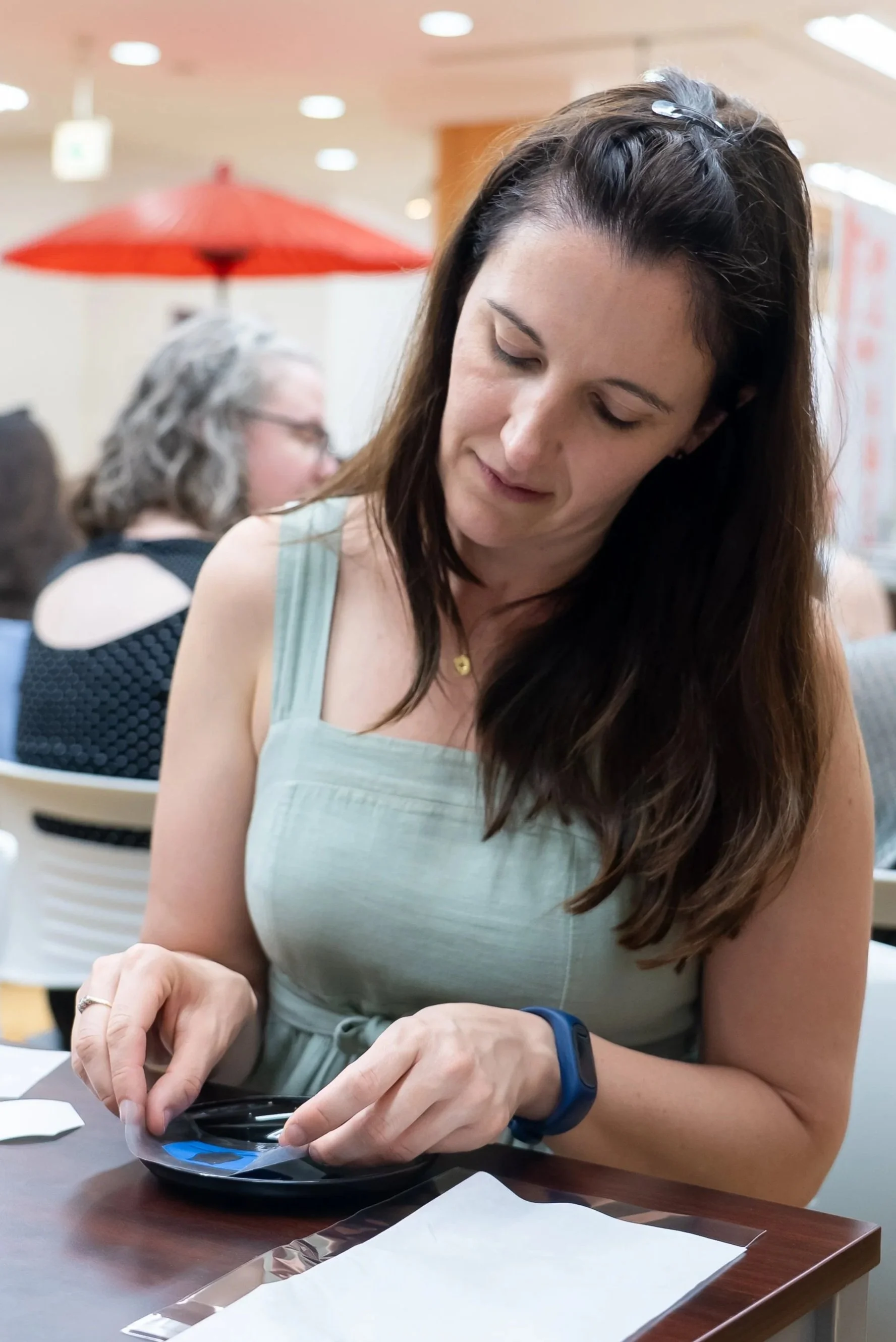
Gold Leaf Craft
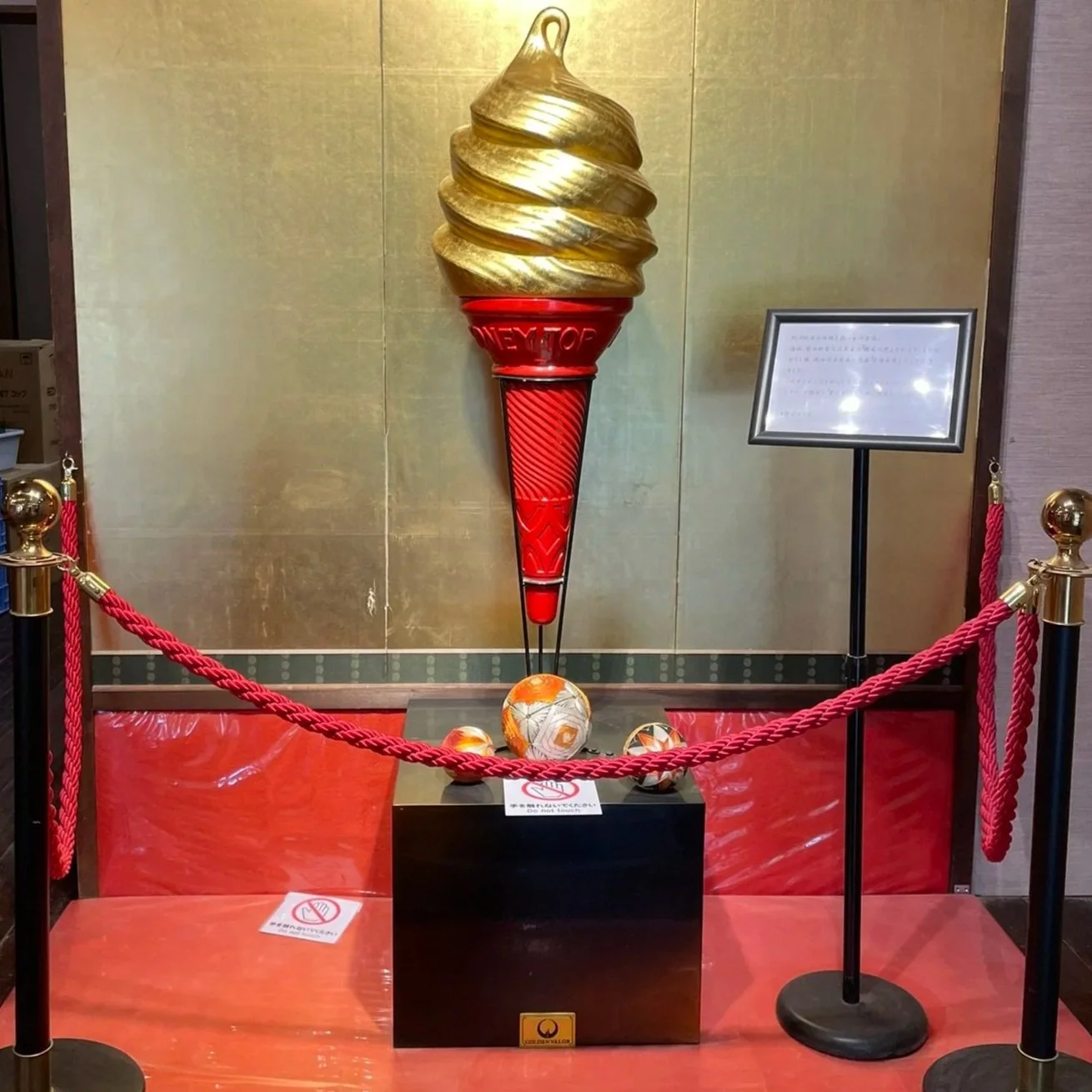
Kanazawa has long been celebrated for its gold-leaf tradition, and we began our craft adventures by carefully applying delicate sheets of gold to decorative plates.
The gold was so impossibly light that even breathing at the wrong moment seemed potentially catastrophic.
The finished pieces were beautiful, but the experience also gave me a much greater appreciation for the patience and precision required to master the craft.
From there, we visited Traditional Handicrafts Village Yunokuni no Mori, where I decorated a pair of chopsticks, determinedly carving an umbrella with sparkles into one and the words “spark joy,” surrounded by stars, into the other.
It required every ounce of focus I could muster.
I could have benefited from at least another ten practice rounds before attempting the final product. My natural ability with such intricate craftsmanship can generously be described as developing.
It was also a useful reminder that handmade objects do not need to be flawless to become meaningful.
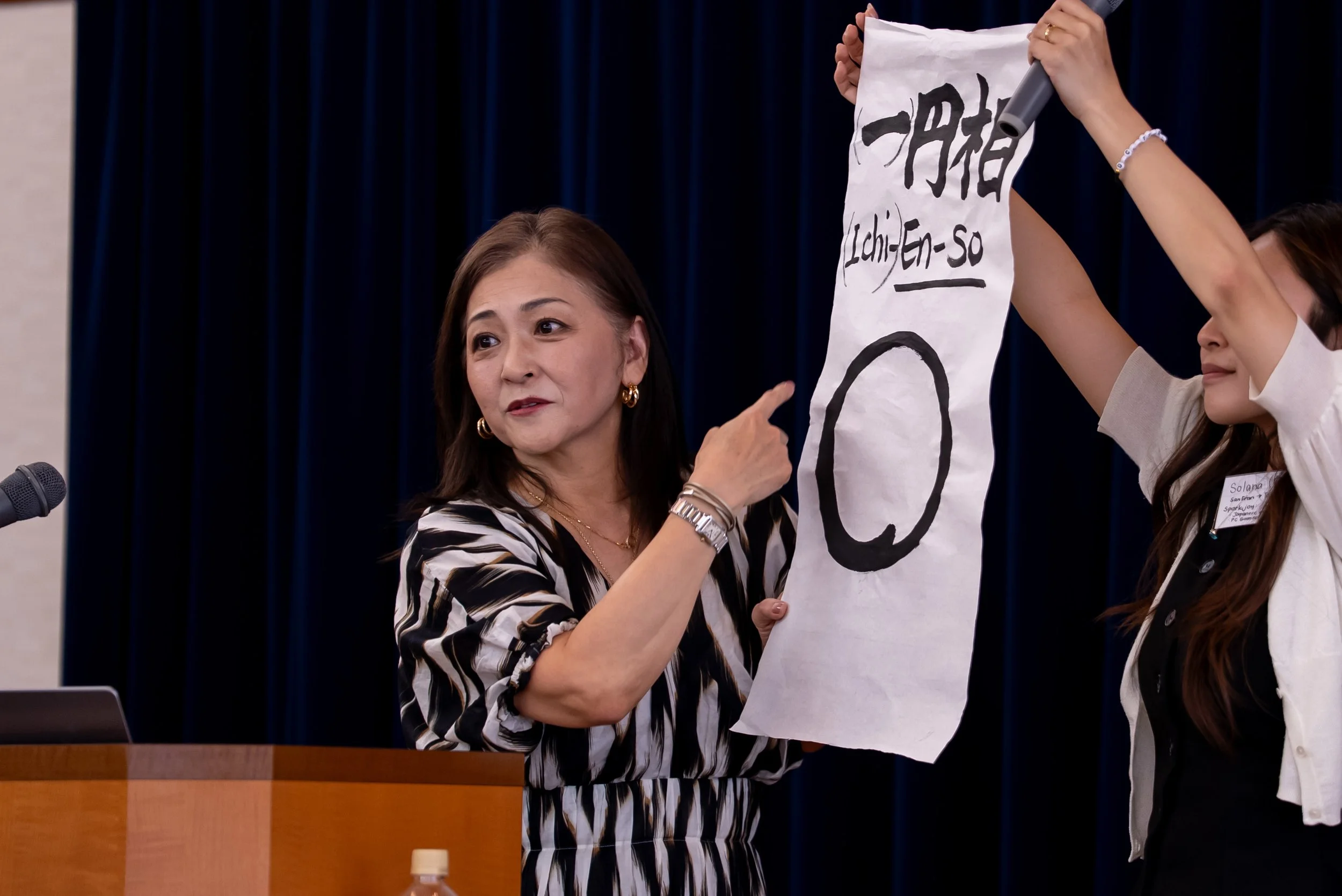
Calligraphy Workshop
During our shodō workshop, we practiced Japanese calligraphy, learning to work with brush, ink, movement, and intention.
We created calligraphy on traditional shikishi boards, which later became keepsakes filled with messages and memories from our fellow retreat participants.
The boards became more than examples of calligraphy.
They became records of a shared experience.
There is something special about handmade objects: they carry evidence of the person who created them.
Their value does not come from perfection.
It comes from attention, effort, and meaning.
Joy Beyond the Workshop
Kenrokuen Garden
Our Kanazawa experience continued well beyond the formal workshops.
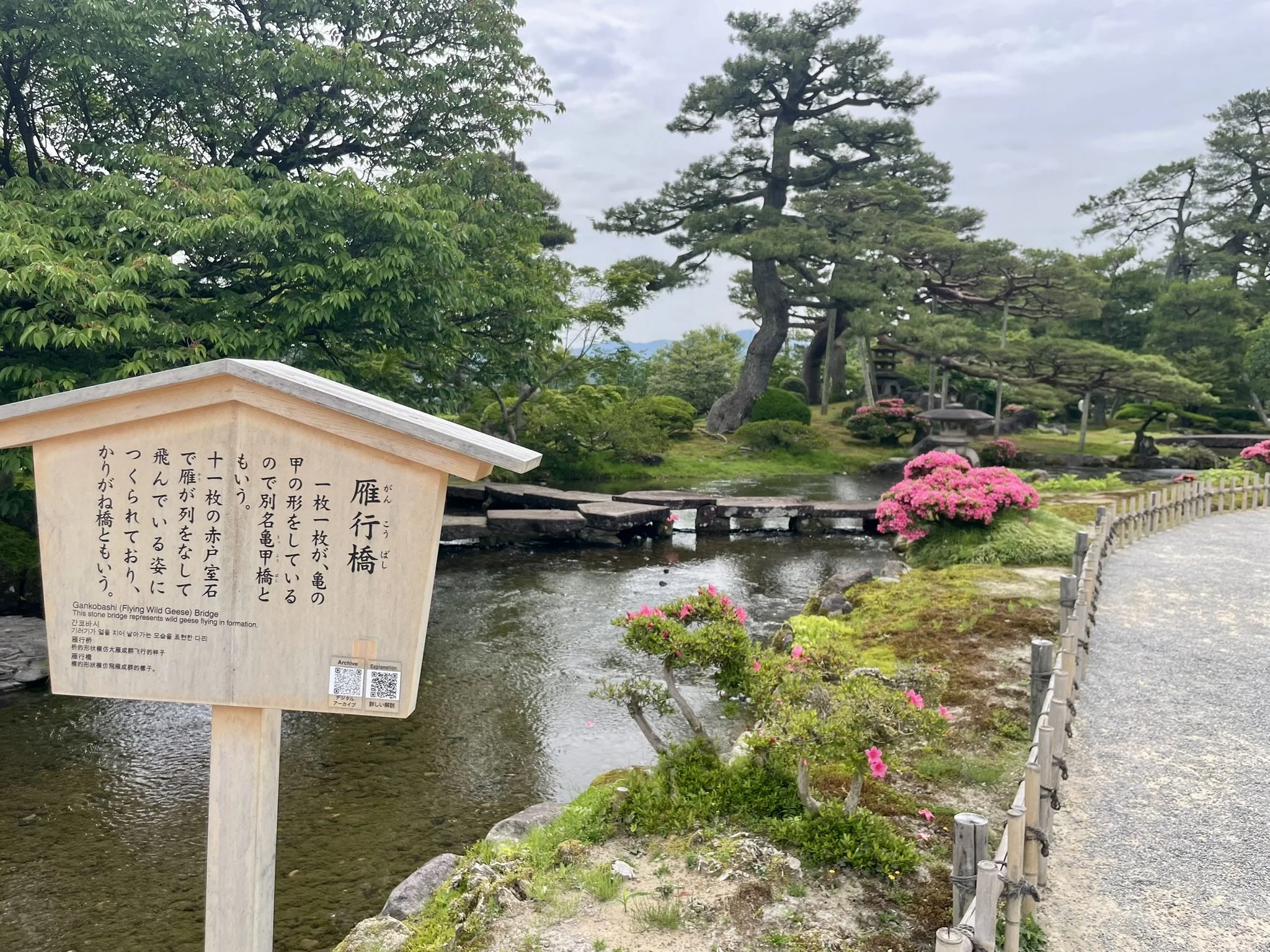
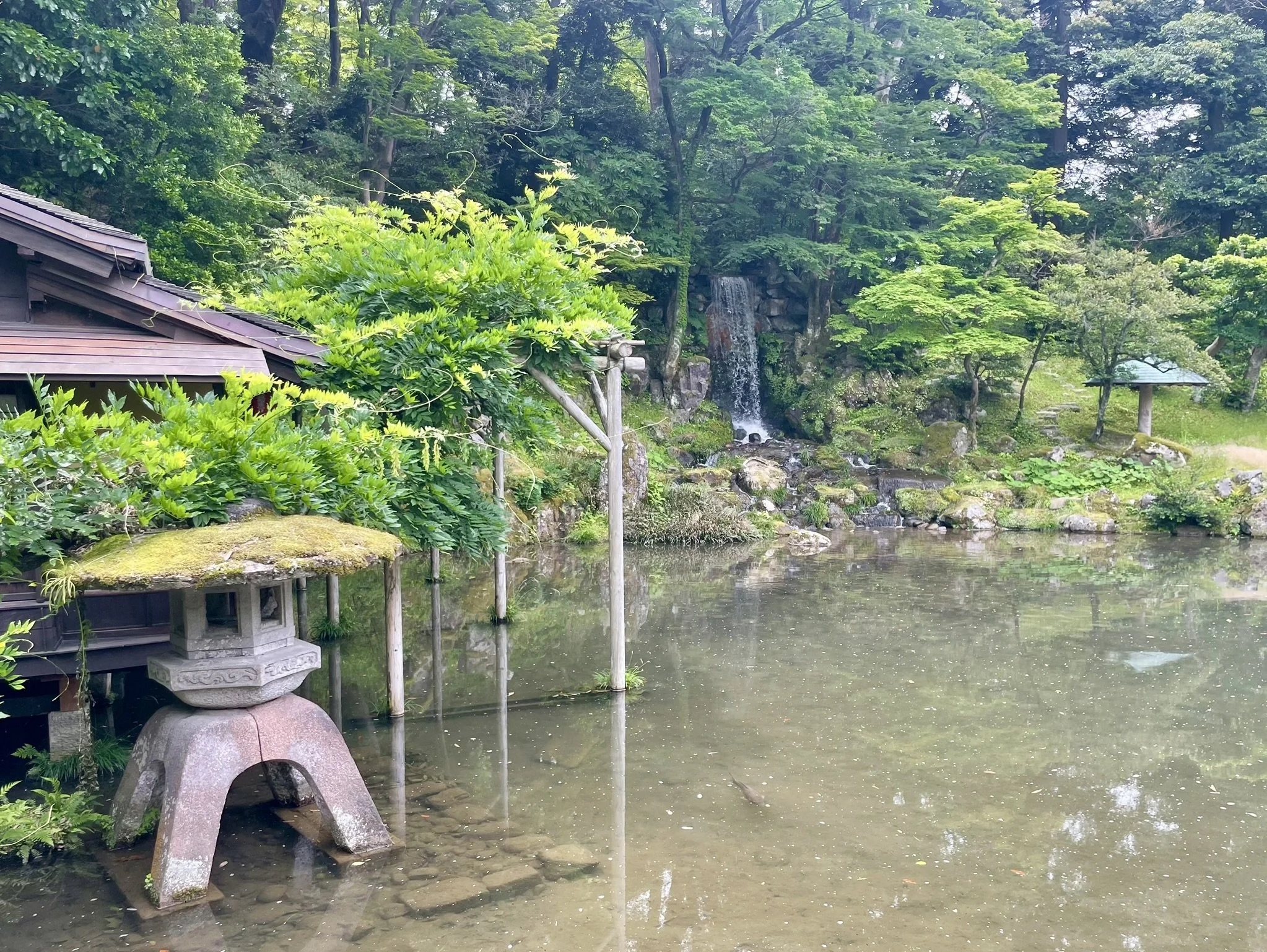
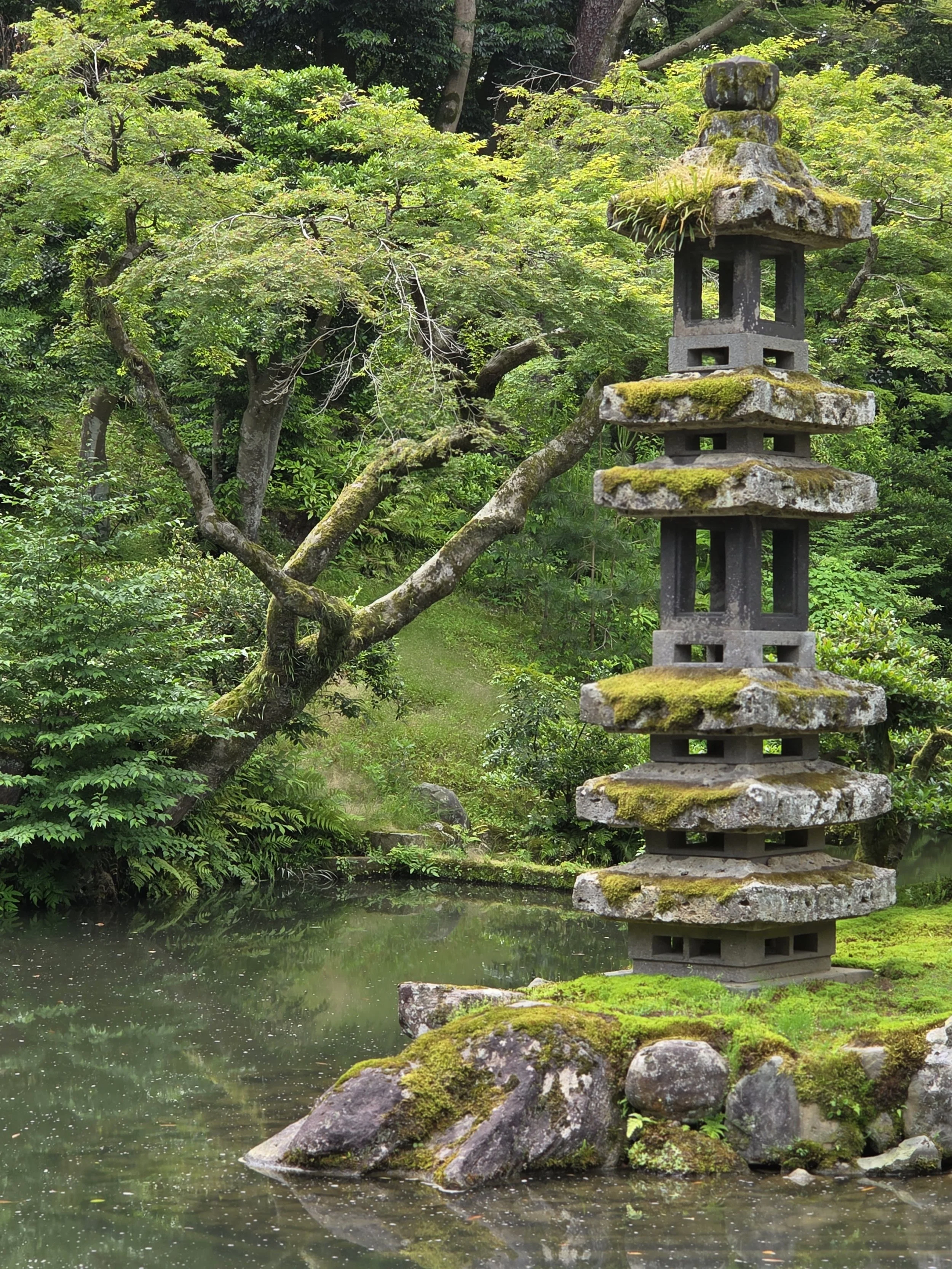
We visited Kanazawa Castle and Kenrokuen Garden, which may be the most beautiful garden I have ever seen.
As we reached the garden gate, Marie Kondo and Takumi were casually waiting there to wish us well on the next part of our travels.
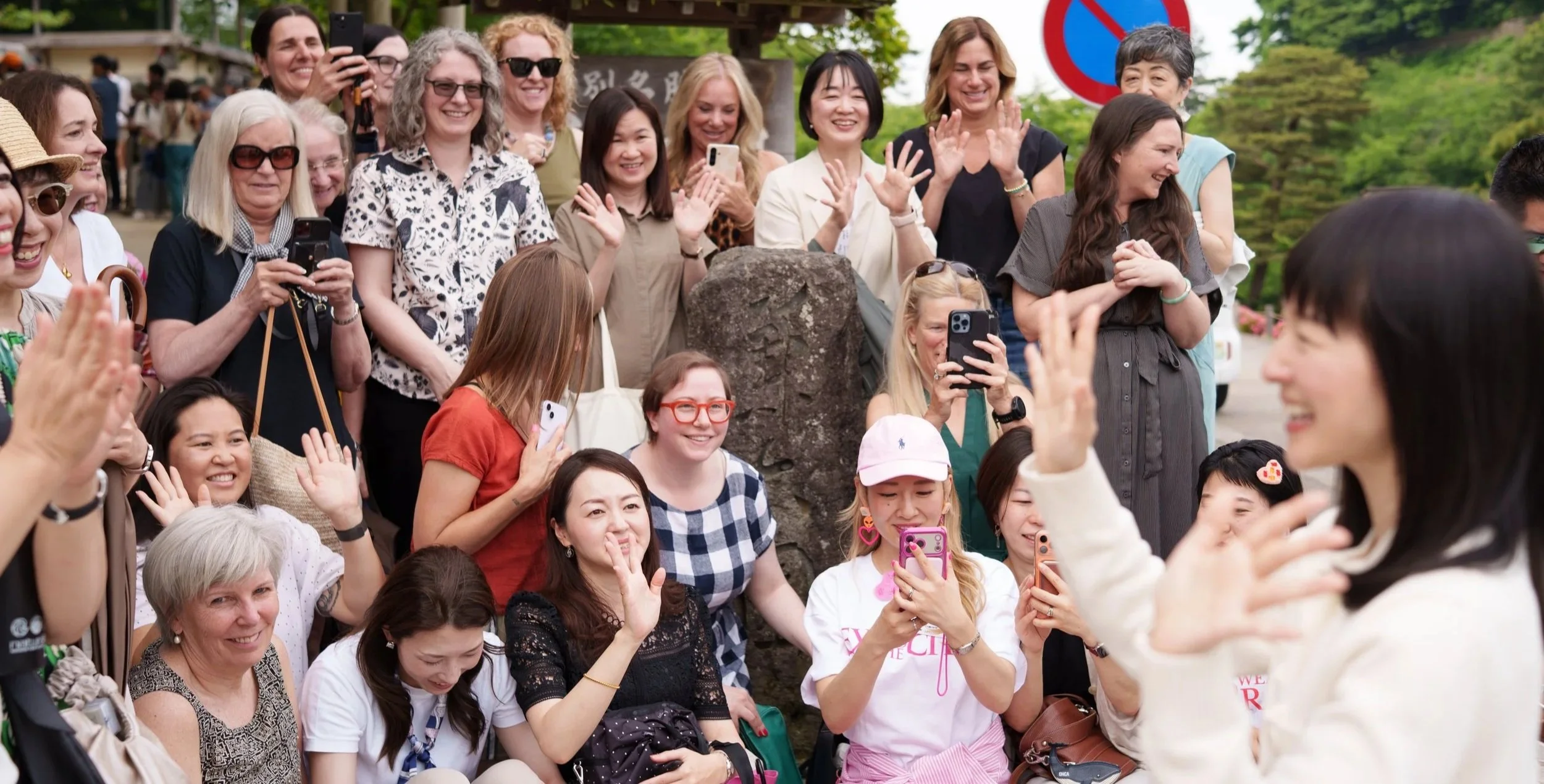
Marie Kondo et. al. at Kenrokuen Garden
What struck me almost as much as seeing them there was how ordinary the moment seemed to everyone around us. Here was one of Japan’s most recognizable figures standing at the entrance to one of the country’s most celebrated gardens, and life simply continued as normal. Such things would not happen in many other places in the world.
Later, I went to dinner with friends and tried mizore sake.
Mizore sake is chilled to an below freezing while remaining liquid. When poured, it transforms into a frozen, slushy consistency in your glass.
Watching my drink essentially freeze before my eyes was surprisingly delightful and drinking it equally so.
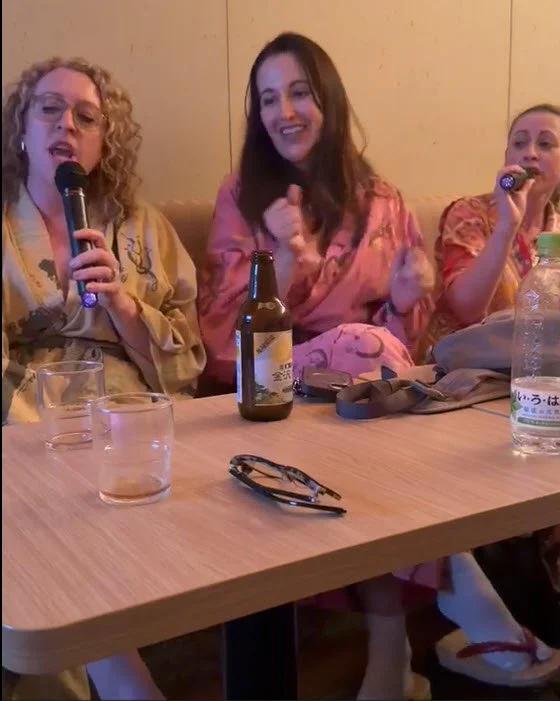
Karaoke
Later that evening, one of my cultural dreams came true: Karaoke.
Wearing yukata, surrounded by new friends, and singing with wholehearted enthusiasm after frozen sake was not an experience I could have predicted when I first decided to become a KonMari Consultant.
But it was exactly the kind of experience I had traveled to Japan hoping to find.
What We Created Together
When I think about Kanazawa, I remember the individual experiences: gold leaf, calligraphy, chopsticks, onigiri, games, gardens, sake, karaoke, and workshops.
But what stays with me most is what those experiences created between us.
Craft gave us a way to connect.
Food gave us reason to gather.
Play helped language barriers disappear.
Shared questions allowed strangers to recognize themselves in one another.
The KonMari Method is often introduced through the deeply personal act of holding an object and asking:
Does this spark joy for me?
Kanazawa showed me what can happen when we begin answering that question together.
We create community.
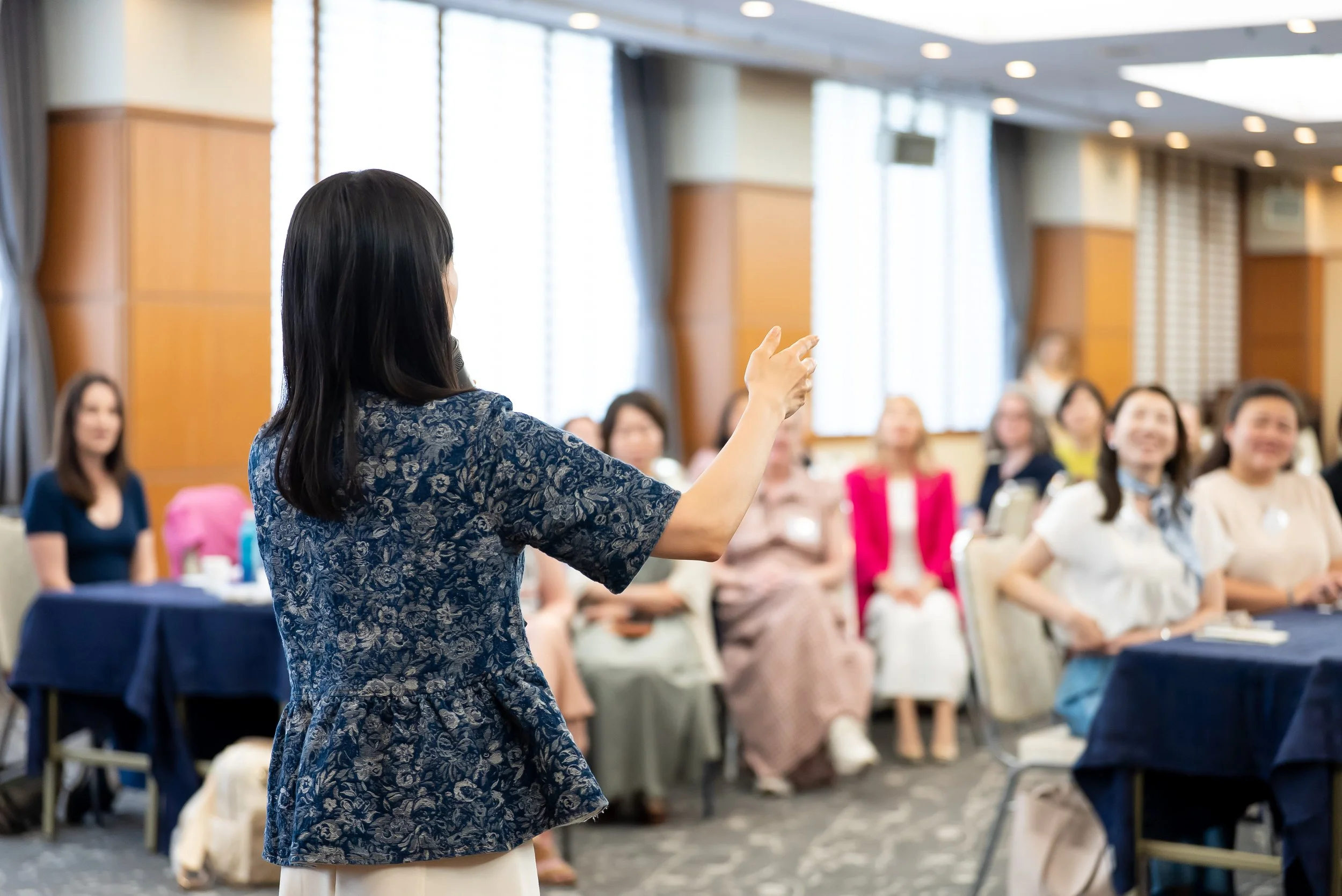
Marie Kondo presenting to KonMari Consultants
Explore More of the Journey
These are only some memories from my joyful journey through Japan. Visit the series hub to follow the route on the interactive map and explore more reflections on joy, friendship, preparedness, place, and the KonMari Method®.
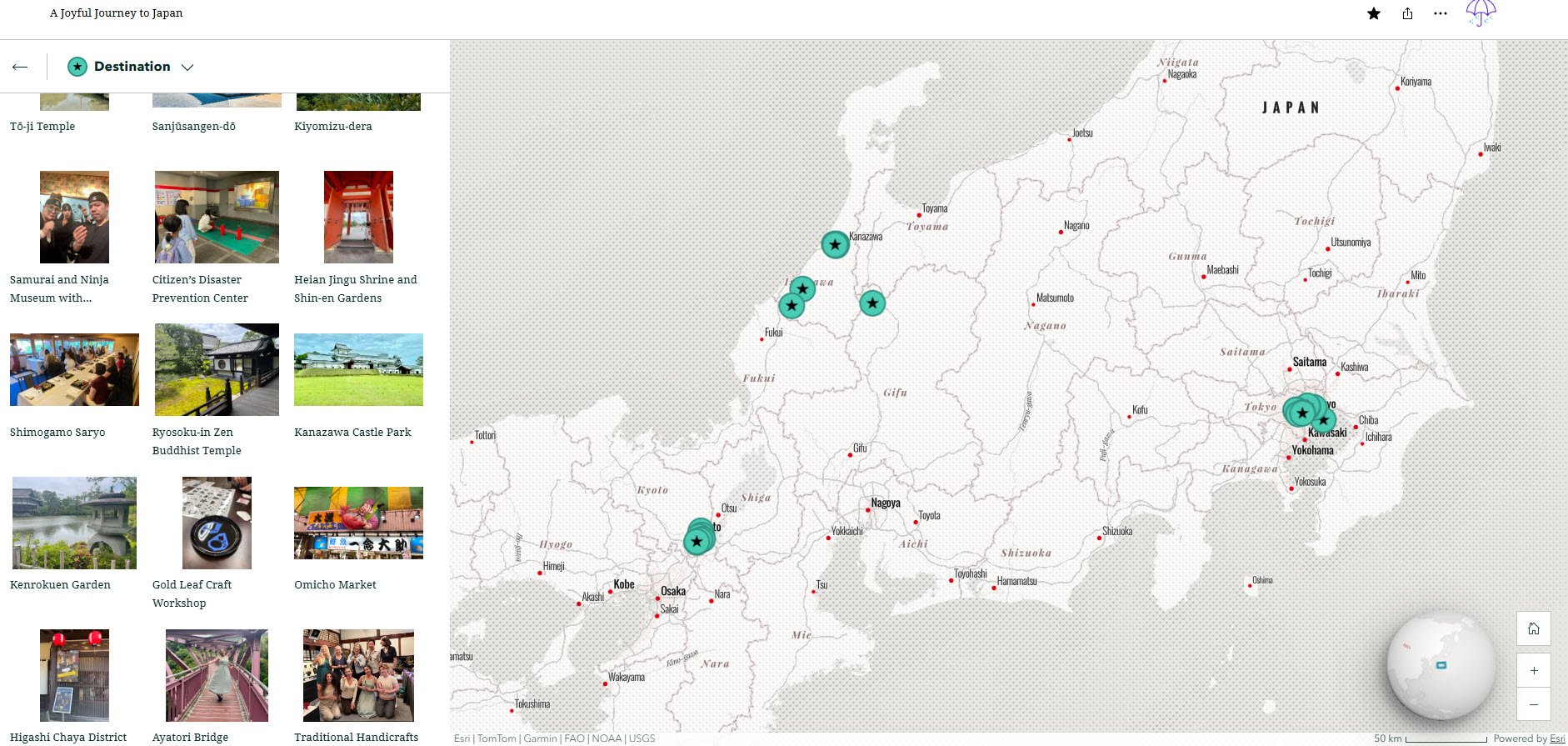
A joyful guide to Japan combining mapped places, cultural discoveries, KonMari experiences, personal stories, and practical inspiration for your own journey.