
Maximum Fun: I Finally Arrived in Japan
Explore the map to see where this part of the journey took place, or use the links below for a specific adventure.
Osaka Station - Sanjūsangen-dō - Kiyomizu-dera Temple - Samurai and Ninja Museum
Part of the A Joyful Journey to Japan series
After a delightful and unexpected evening in the Bay Area, I finally boarded a plane to Japan. My journey had already taught me that even the most carefully planned adventure can go awry. By the time I landed in Osaka, I was relieved, tired, and determined to make up for lost time.
I had finally arrived.
And Japan immediately made me work for it.
Entering the World’s Most Elaborate Escape Room
One thing I had not understood before travelling to Japan is how much of the urban environment exists underground.
Train platforms, pedestrian passageways, restaurants, shops, and entire routes stretch beneath the streets. Google Maps did not direct me along roads, instead sending me down staircases, through underground corridors, and into an underground world.
I had navigated the airport with minor confusion and was feeling fairly confident in my navigation skills. That confidence evaporated at Osaka Station. The station itself seemed to be an entire city, with numerous levels stretching both beneath and above ground. While some signs included English, much of what surrounded me was written in Japanese characters I could neither read nor sound out. I could not compare what Google Maps was telling me with the signs directly in front of me.
Complicating matters further, the Wi-Fi on my phone had not worked since I landed.
And it was raining.
I moved through Osaka by catching whatever free carrier or public network I could find, using each brief connection to load a map, send a message, and get freshly confused before the signal disappeared again.
I was wet, exhausted, alone in a country I had never visited, and trying to navigate a seemingly endless city with only intermittent access to the tool meant to guide me.
Rain, Tears, and Friendship
Eventually, I made my way to the hotel where I had originally planned to stay and found my friend Michael Quan there with Melissa Klug, a new organizer friend whom I’d not yet met.
Michael and Melissa had been recording a podcast episode during my navigation-initiation. They are some of the coolest humans and professional organizers on the planet and I was beyond excited to hang out with them and wanted to make a good impression.
I arrived wet with rain and tears. Melissa and I met for the first time with a hug, and, while there are more polished ways to introduce yourself to someone, there are perhaps few more honest ones. Michael immediately began working on my phone and, for the first time since I had landed, got the Wi-Fi working properly.
After hours of navigating, my practical crisis was solved, and the emotional gift mattered just as much. I had finally reached people who were expecting me and who were grateful I was there!
From Osaka to Kyoto
The next day, we met up again at Osaka Station and continued together to Kyoto. The escape room of Osaka station was much easier with internet connectivity, after sleep, and with two friends who had visited the country before.
Kyoto had long occupied an almost mythical place in my imagination. It was the city of temples, gardens, traditional streets, and cultural history that I had come so far to experience.
Unsurprisingly, my first encounter with it was neither silent or serene. It was crowded, energetic, and full of people moving in every direction.
That contrast became one of the things I loved most about Japan. Profound stillness and intense stimulation often exist side by side. The sacred and the everyday were constantly interwoven.
A Thousand Faces of Compassion
One of our first stops in Kyoto was Sanjūsangen-dō, the temple known for its hall filled with more than a thousand golden figures of Kannon, the bodhisattva associated with compassion.
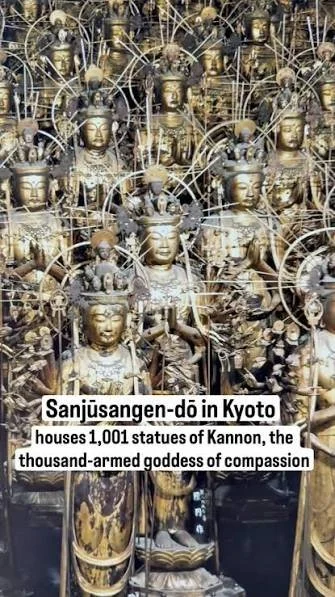
From the outside, the long wooden building appeared restrained and quiet, giving no clue to what was waiting inside. Taking our shoes off, we stepped onto a path of carpets laid over a centuries-old wooden floor that creaked with significance. Turning a corner, we entered a hall over 400-feet long, full of row after row of golden figures. There were over 1,000 in all, and at first glance, they appeared almost identical. The longer one looked, the more individuality emerged. At the center of all of sat an enormous Kannon, the bodhisattva of compassion. The thousand standing figures gathered on either side felt like compassion multiplied, while the seated Kannon remained its still and steady center.
No cell phones were allowed, which was refreshing and wonderful. People were respectful as they offered incense and candles, and the atmosphere felt serene and timeless.
The temple grounds were also filled with schoolchildren, all wearing identifying bright yellow caps that made them easy to spot as they moved in neat groups. Several approached us to practice their English. Those brief exchanges became some of the most charming moments of the day. Children would gather their courage, ask a carefully prepared question, listen intently to the answer, and then beam with pride to see that the conversation worked.
The experience made the temple grounds feel less like a monument and more like a living palace, where history, awe, curiosity, and everyday life all existed together.
In under less than 24 hours, I was feeling wonderfully welcomed in this country, hearing the call of presence and stillness, to notice the beauty surrounding me.
The Climb to Kiyomizu-dera
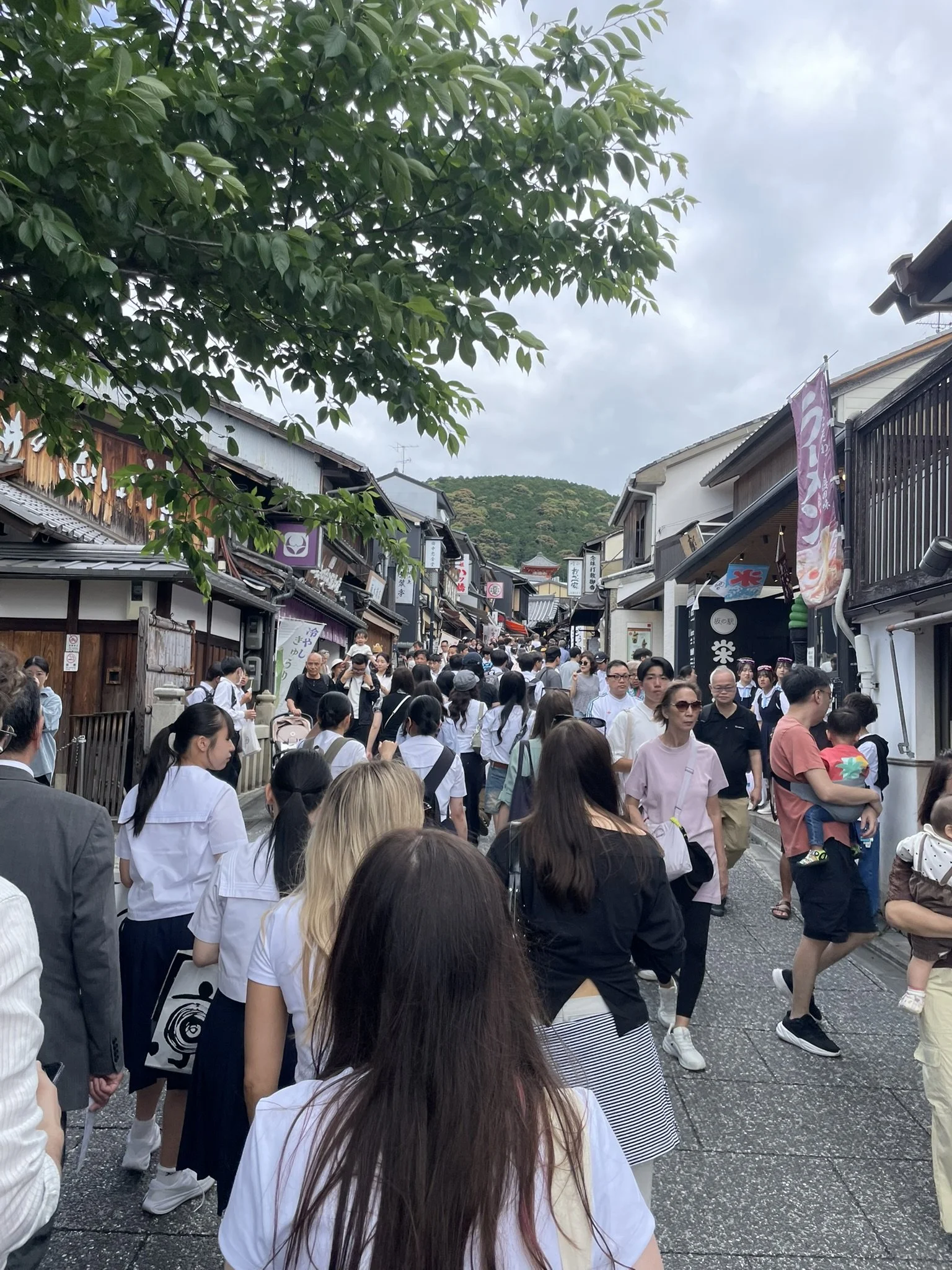
The walkway towards Kiyomizu-dera.
From the quiet order of Sanjūsangen-dō and the cheerful energy of the school groups, we moved into a very different Kyoto experience: the lively, crowded climb toward Kiyomizu-dera.
The walk was part of the experience as the approach was packed with visitors. I allowed myself to join a throng of humanity and be moved uphill through narrow streets and corridors of food, craft, tradition, commerce, and celebration.
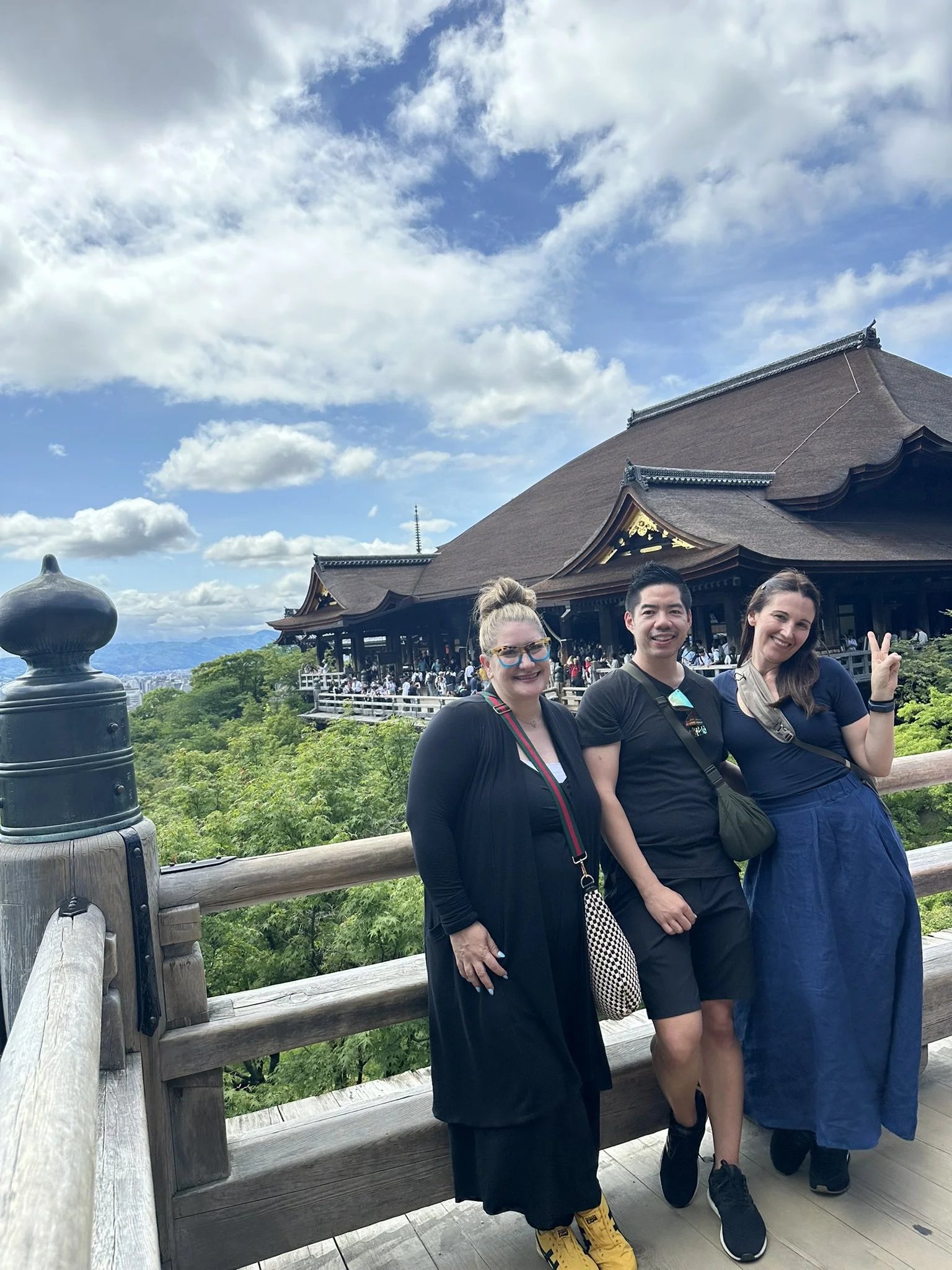
Kiyomizu-dera
Then we reached the temple.
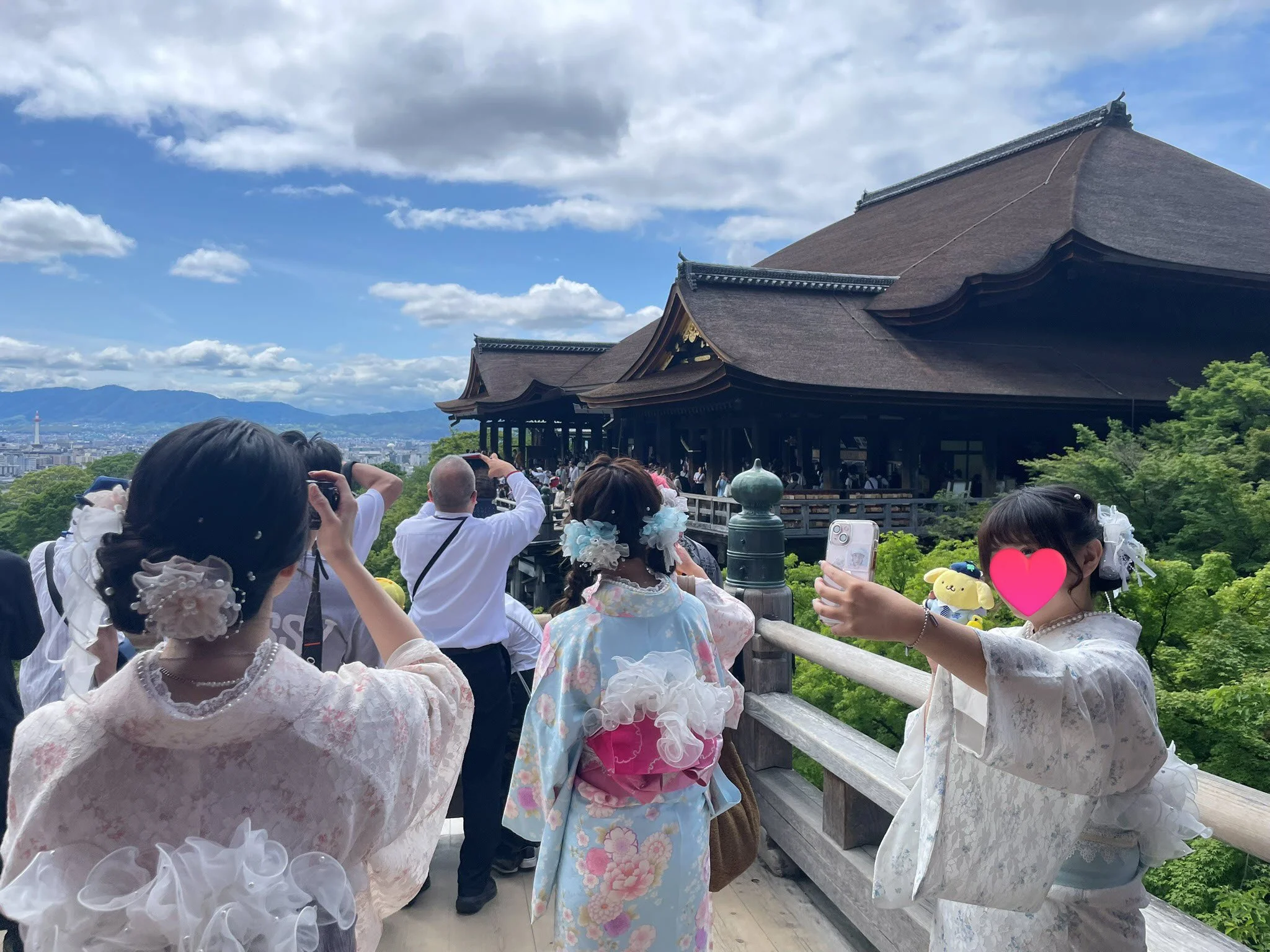
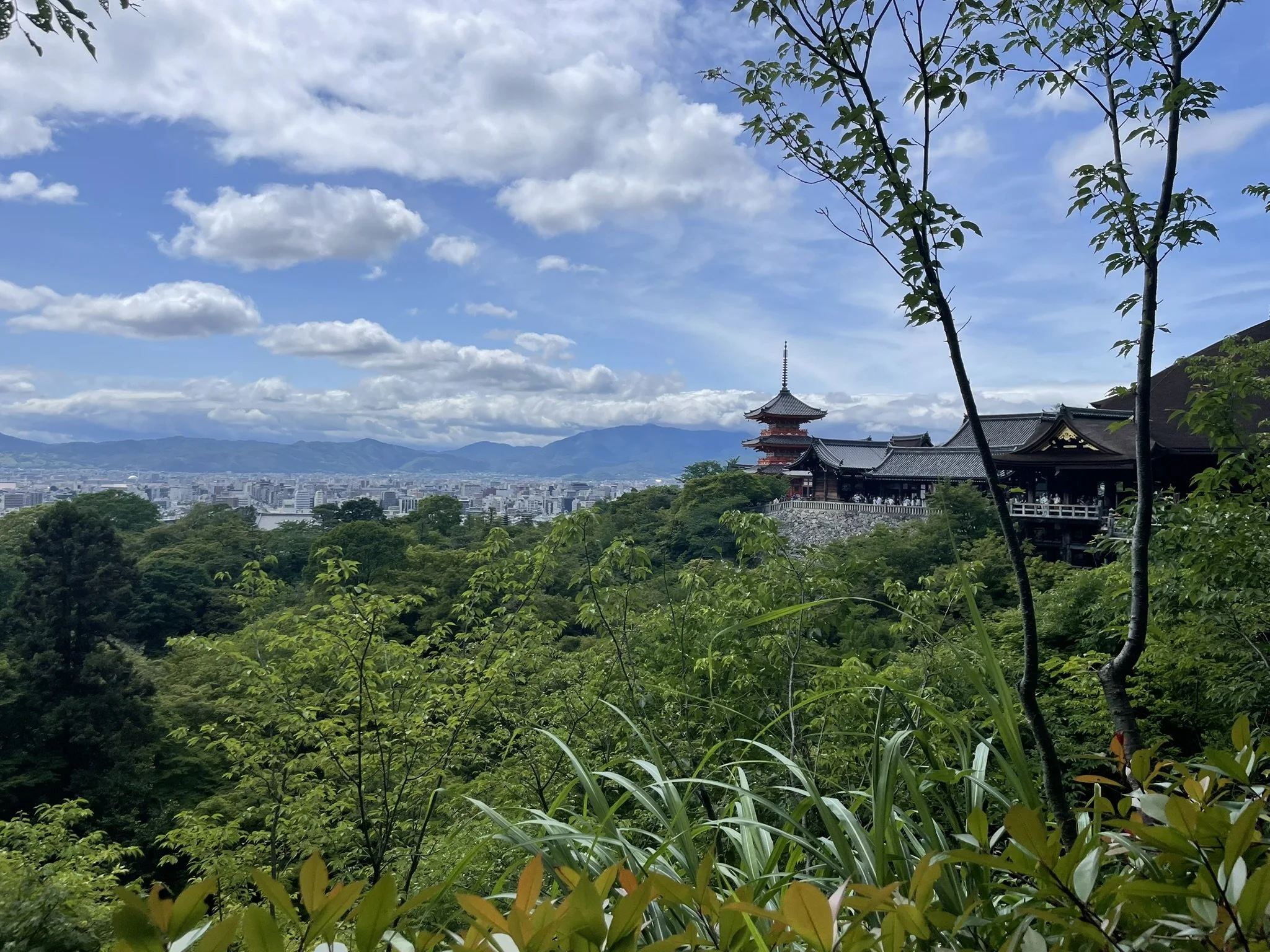
Kiyomizu-dera rises dramatically above the hillside, with views stretching across Kyoto. Its famous wooden stage seemed to float over the landscape, offering a sense of openness after the compression of the crowded streets below.
The path had been busy. The climb had been crowded. Yet at the top, there was room to look outward.
Travel often works that way. The most memorable moments are not always divided neatly into calm and chaos. Sometimes the crowded approach makes the expansive view feel even more powerful.
The “Maximum Fun” Experience
After Kiyomizu-dera, we went to the Samurai and Ninja Museum for an experience package aptly named Maximum Fun.
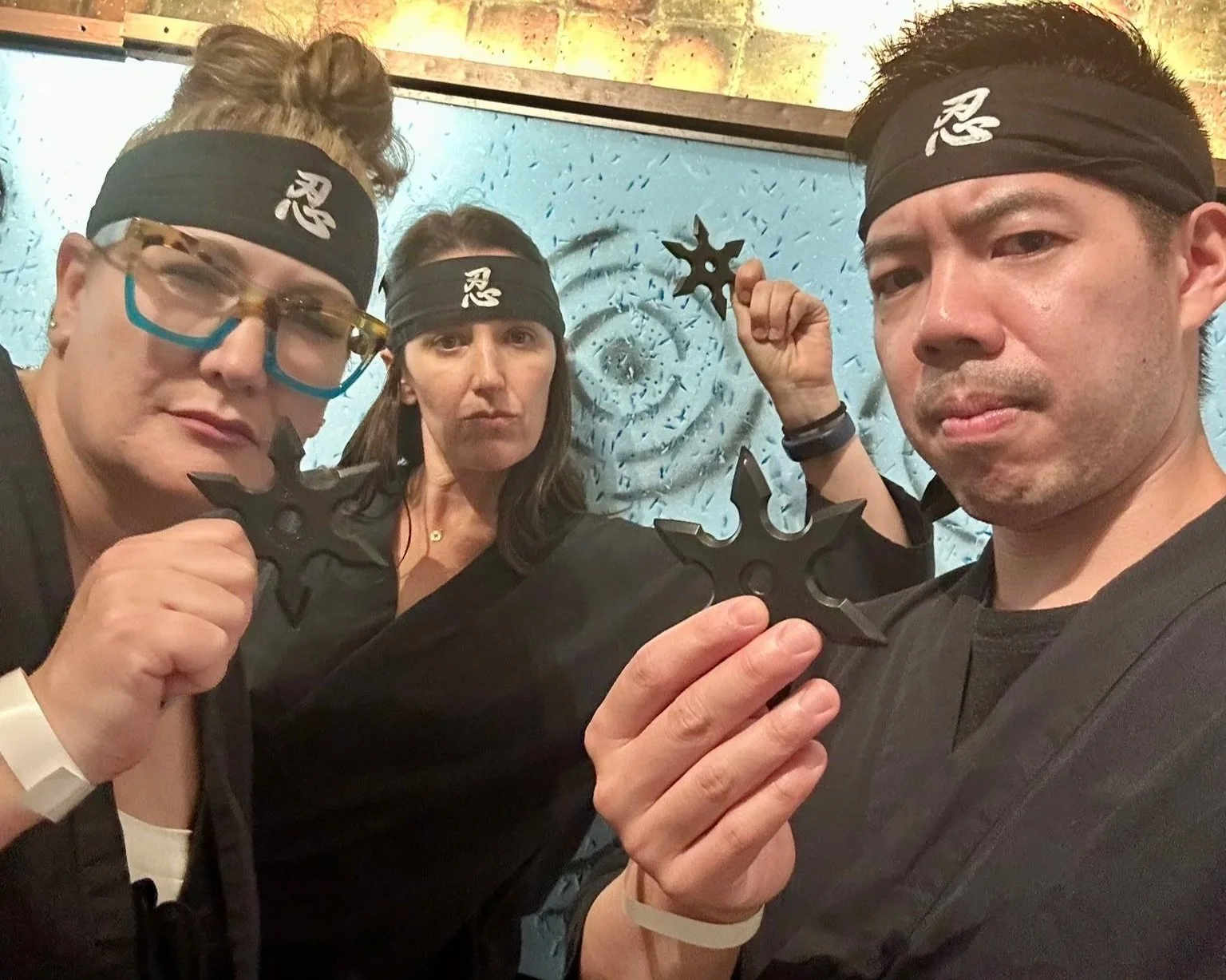
SAMURAI NINJA MUSEUM
It delivered on the promise.
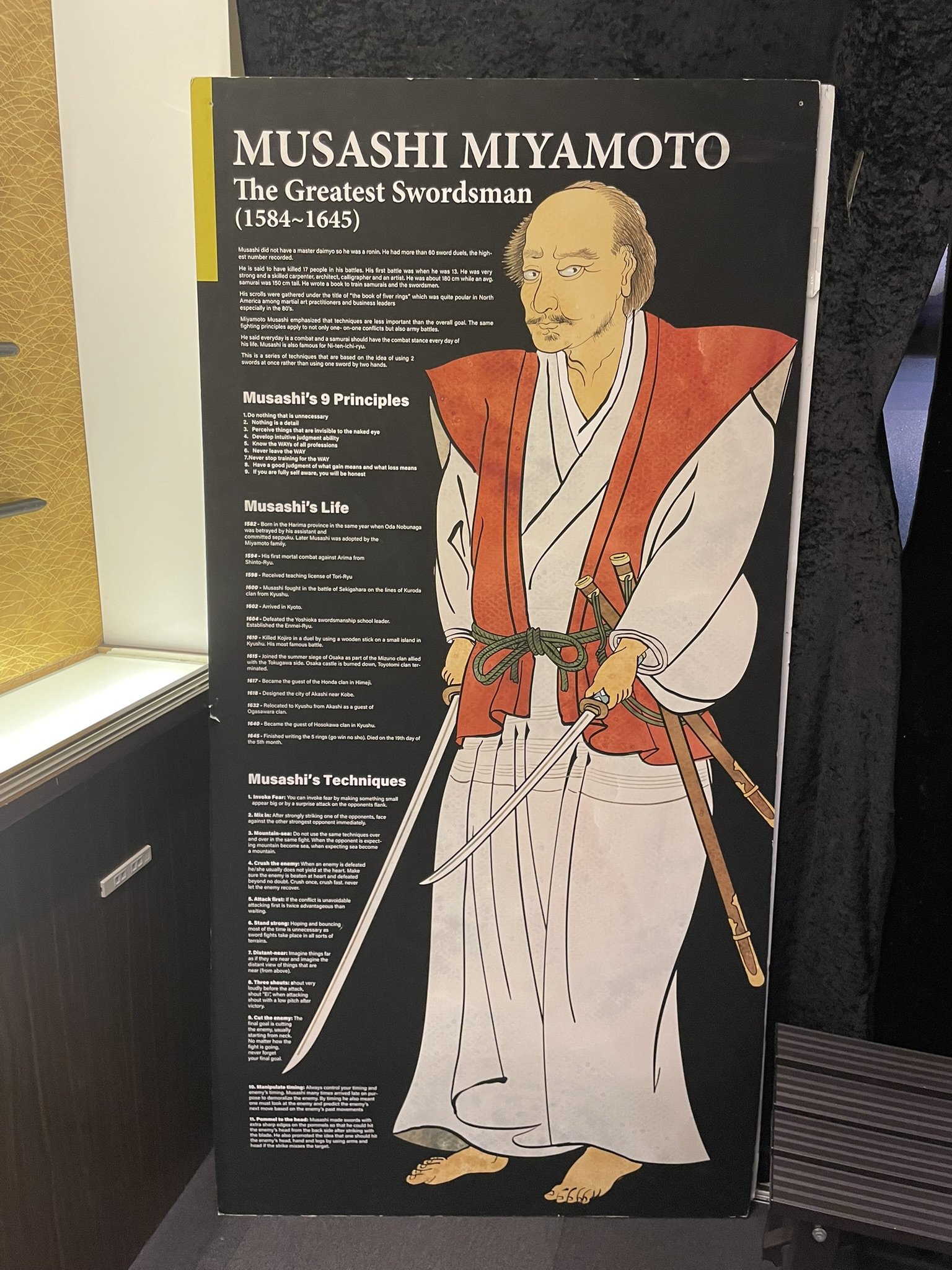
The visit included an introduction to samurai and ninja history, armor, weapons, and their roles within Japanese society. Seeing the artifacts and hearing the stories behind them gave context to the hands-on experiences that followed.
Then it was time for my favorite part: swords.
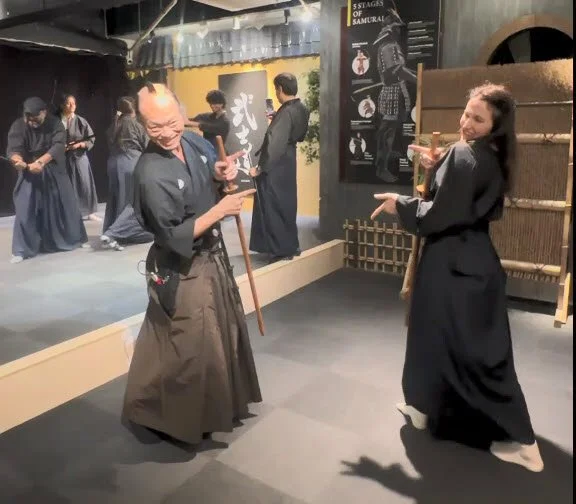
Our instructor was an actor and fight choreographer who had appeared in several film productions. He brought the precision and presence of a professional performer to the lesson, showing us how carefully staged sword fighting is created for the screen. We learned how to stand, move, handle the sword, and perform a choreographed sequence.
SAMURAI NINJA MUSEUM
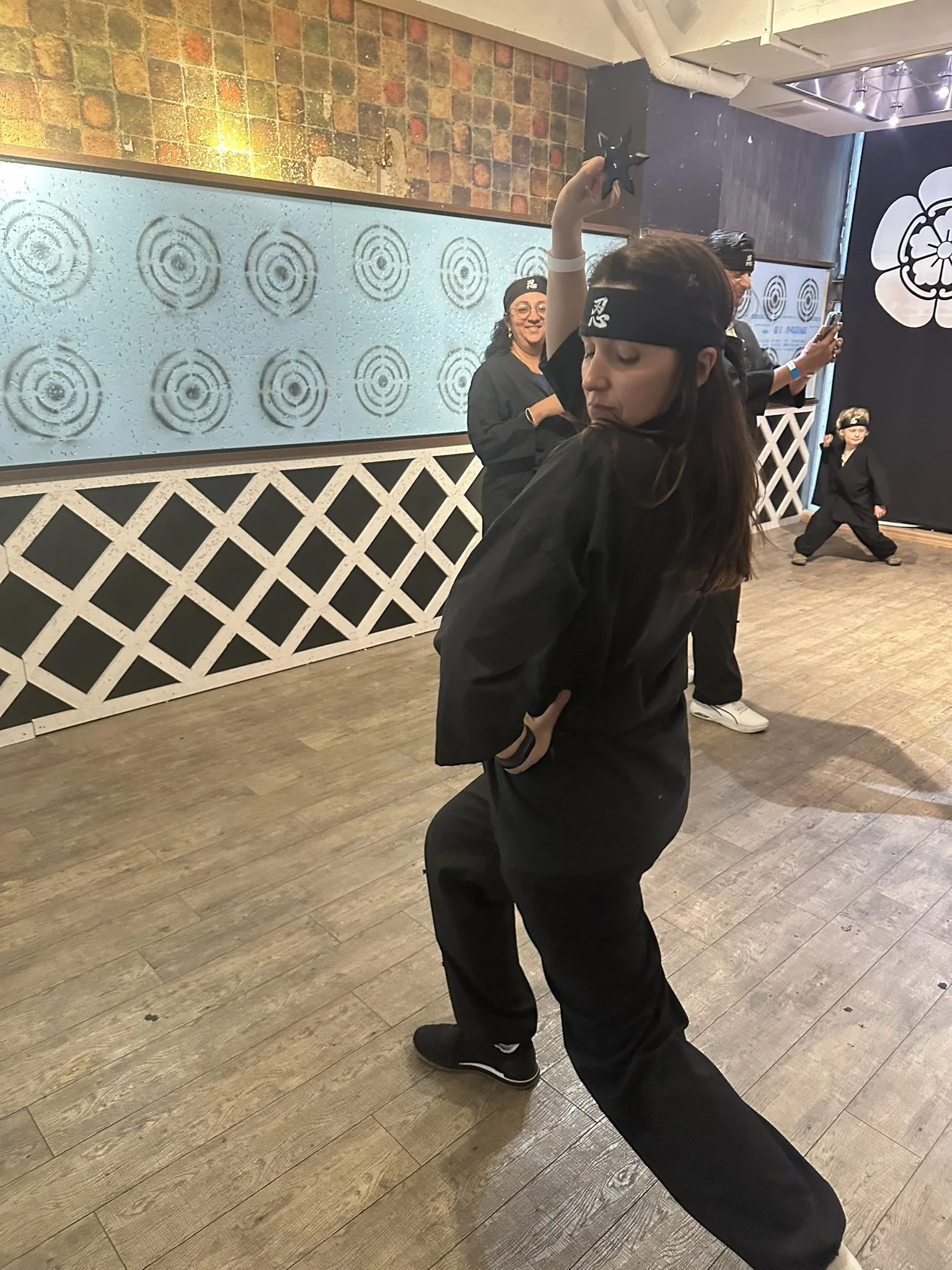
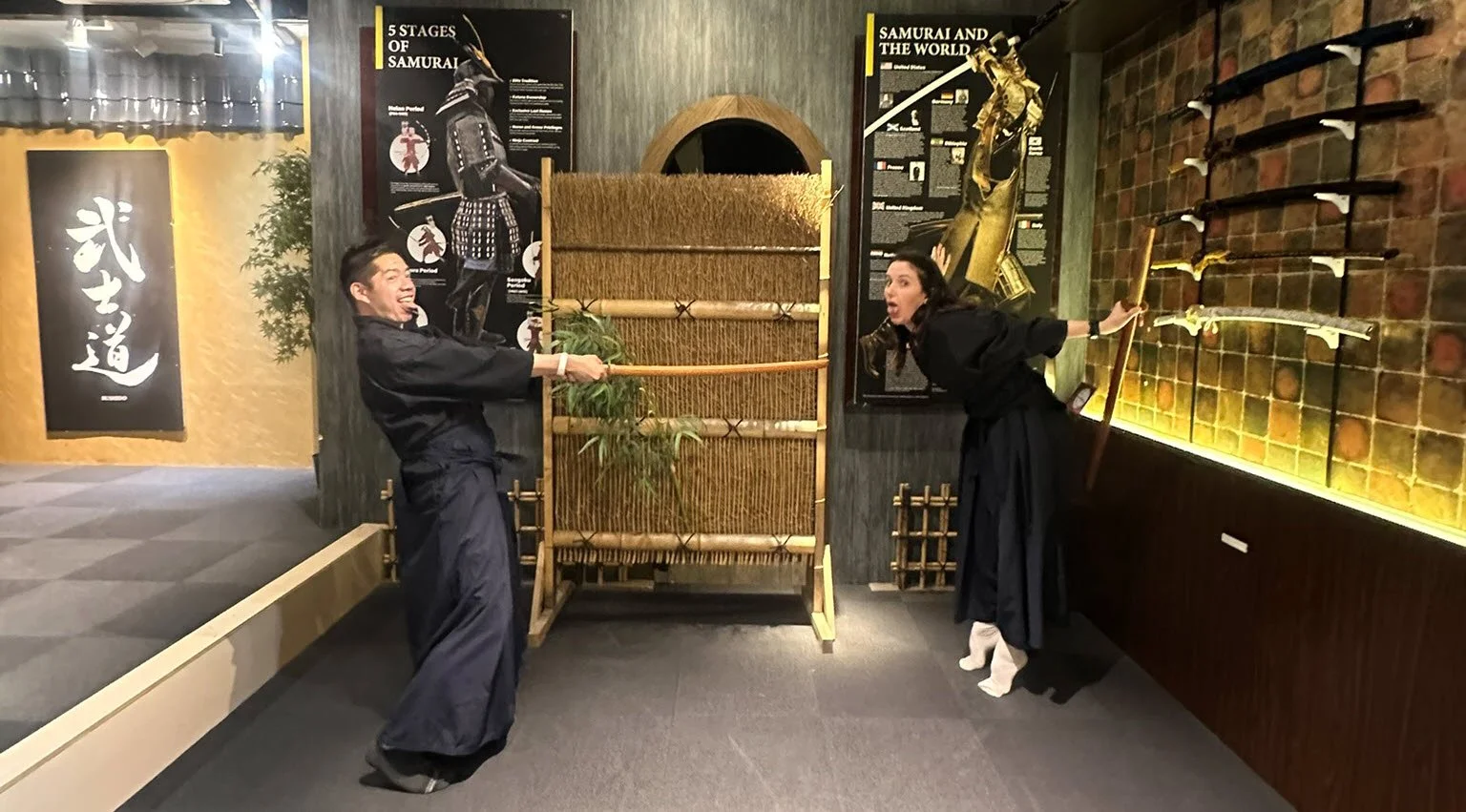
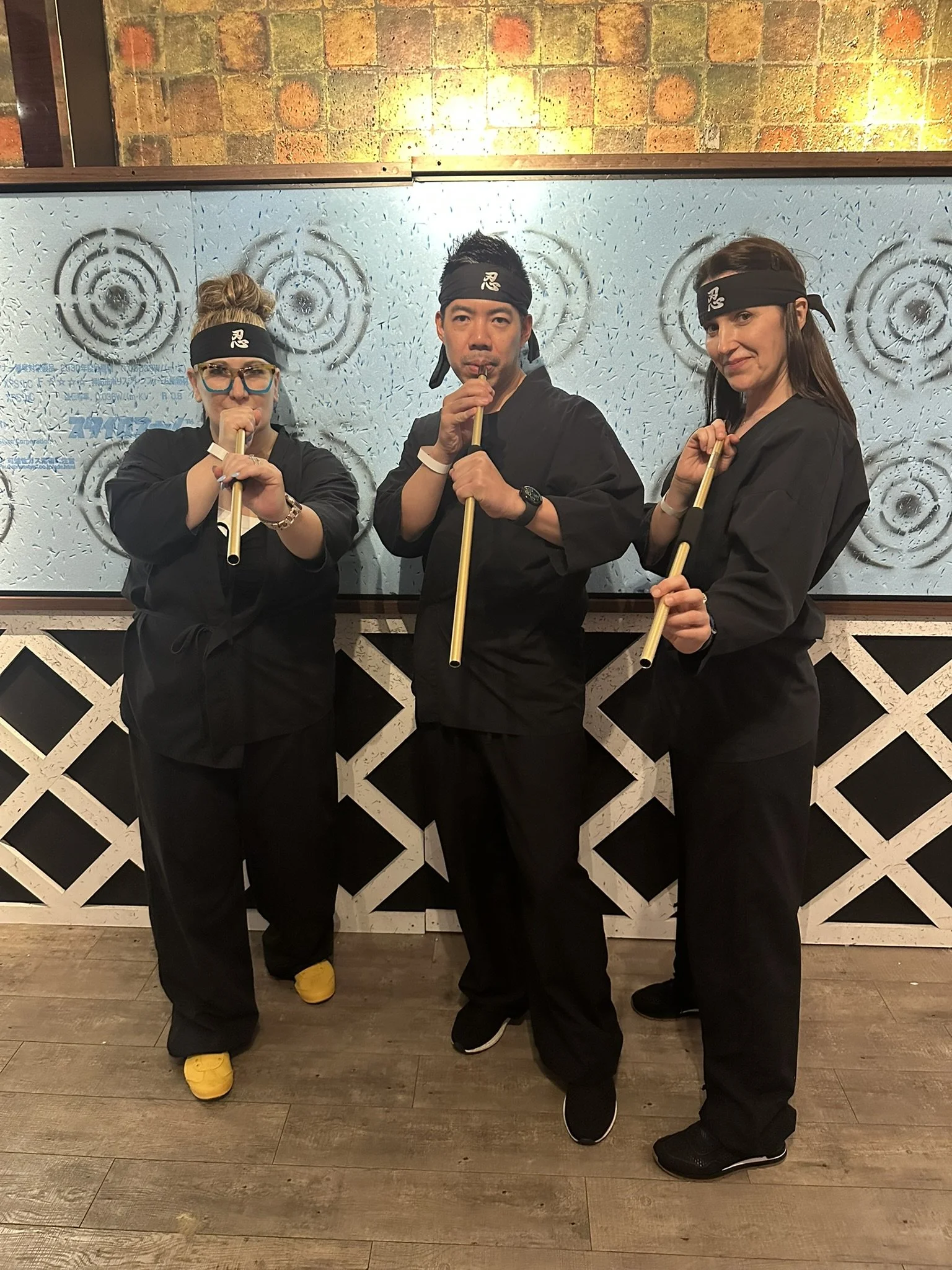
We embraced maximum fun and wholehearted silliness. We dressed in costumes. We posed with swords. We threw ninja stars and blew blow darts. We tested our coordination with nunchucks, with varying degrees of competence.
There are times when travel invites quiet reflection.
There are other times when it invites you to wear a costume, hold a sword, laugh with your friends, and commit completely to the experience. This was unquestionably the second kind.
The package could not have been more accurately named.
This was maximum fun.
Why Maximum Fun Matters
“Maximum fun” became more than the name of the package. It captured something essential about the way I wanted to experience the trip. The way I want to experience my life.
Maximum fun does not mean that every moment is easy or that I ignore discomfort. Maximum fun means choosing to participate wholeheartedly anyway.
SAMURAI NINJA MUSEUM
Maximum fun means accepting a hug from a new friend while wet with rain and tears.
Maximum fun meant pausing among more than a thousand golden figures and allowing myself to be moved.
Maximum fun meant answering the careful questions of schoolchildren in bright yellow caps.
Maximum fun means allowing delight to matter.
As adults, we can become accustomed to minimizing joy. We hesitate because something might look silly, seem inefficient, take too much time, or fall outside the version of ourselves we are accustomed to presenting.
We wait to feel relaxed before we allow ourselves to play.
But sometimes play is what helps us become relaxed.
Sometimes joy does not arrive because circumstances have finally become perfect. It appears because we decide to meet imperfect circumstances with curiosity, humor, and willingness.
A Different Kind of Arrival
When I think about arriving in Japan for the first time, I do not remember a polished moment when everything clicked neatly into place. Far from it!
I remember rain. I remember Google Maps leading me beneath Osaka.
I remember standing inside the world’s original escape room in Osaka station with everything written in literal Japanese.
I remember finding Michael and meeting Melissa for the first time with a tearful, rain-soaked hug.
I remember the stillness of Sanjūsangen-dō, the rows of golden figures, and the cheerful schoolchildren in thier yellow hats.
I remember the crowded climb to Kiyomizu-dera and the expansive view once we reached it.
I remember the Maximum-Fun experience, our silver-screen sword instructor, the costumes, the weaponry, and the laughter.
Perhaps arrival is not the moment a plane lands. Perhaps it is the moment we stop fighting the fact that we are tired, lost, overwhelmed, or behind schedule, and begin participating in the life that is actually happening.
I had not arrived in Japan according to plan.
But I had arrived.
And after everything it took to get there, I was ready to make the most of it.
Maximum fun had officially begun.
Kiyomizu-dera
Explore More of the Journey
These are only some memories from my joyful journey through Japan. Visit the series hub to follow the route on the interactive map and explore more reflections on joy, friendship, preparedness, place, and the KonMari Method®.
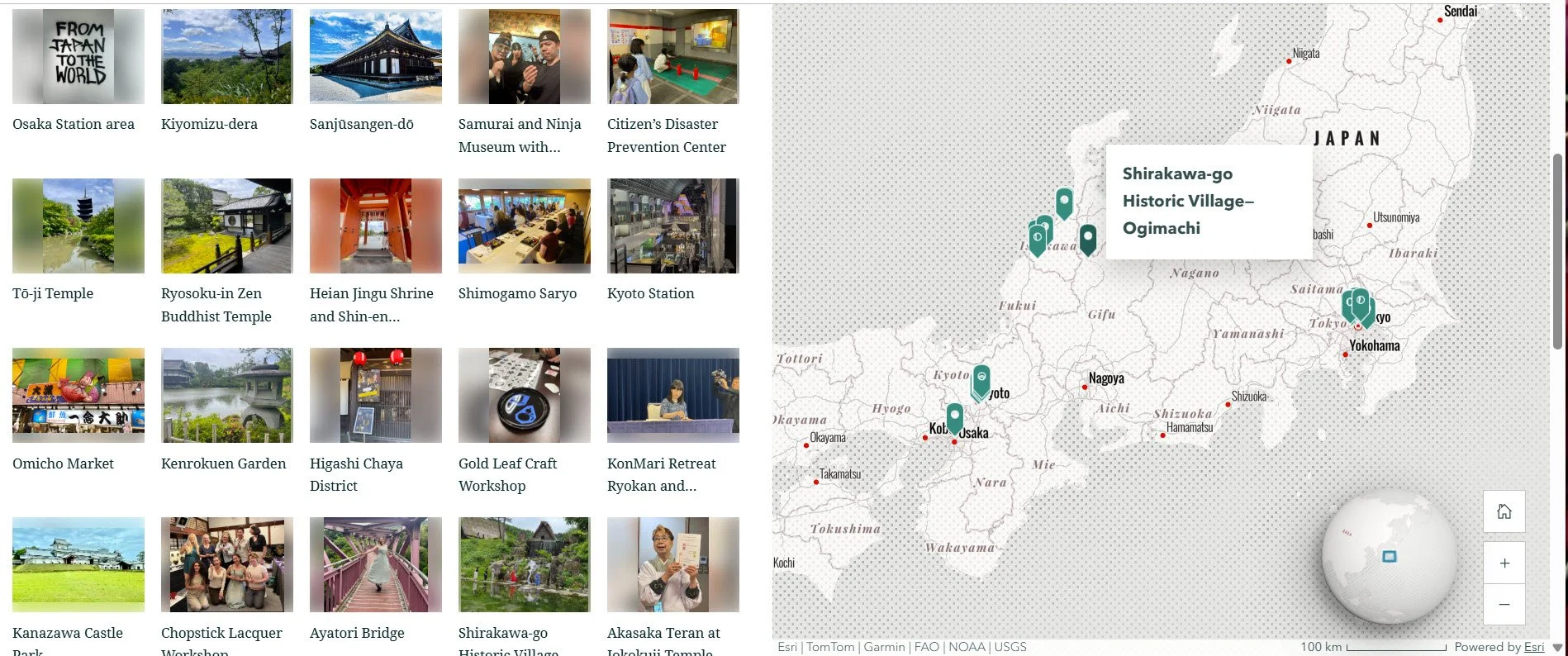
A joyful guide to Japan combining mapped places, cultural discoveries, KonMari experiences, personal stories, and practical inspiration for your own journey.