
Part of the A Joyful Journey to Japan series
Leaders in Disaster Preparedness
September 1 is Disaster Prevention Day in Japan.
The date serves a reminder of the 1923 earthquake and an opportunity to remember and prepare for the variety of environmental hazards that shape life in Japan.
Japan has good reason to take preparedness seriously. Its geography exposes the country to a range of natural hazards, such as earthquakes, typhoons, flooding, tsunamis, volcanic eruptions, as well as related fires. Being passionate about preparedness, I was impressed by both the quality and quantity of free public education options available throughout the country.
Japan has disaster training facilities where ordinary people can experience preparedness firsthand.
Before the KonMari retreat began, I visited one disaster-prevention learning center in Kyoto. After the retreat ended, I visited another in Tokyo.
Considering all the certain environmental uncertainties that we collectively face, it got me to thinking:
Why aren’t disaster preparedness training facilities located around the world?
Preparedness You Can Practice
The standard approach to emergency preparedness is through information.
Download the alert app.
Read the checklist.
Buy the supplies.
Make the plan.
While these things matter, knowing what to do and having practiced what to do are not the same thing.
Japan’s disaster-prevention centers give people opportunities to experience hazards in controlled environments and practice responses before an emergency occurs.
People are not looking at pictures of earthquakes. ...They are being shaken like rag dolls inside earthquake simulators.
They are not reading about smoke. …They are practicing how to move through it.
They are not being shown a photograph of extreme wind and rain. …They are drenched with it.
Japan’s training facilities are effectively Disneyland for disaster preparedness.
Honestly, I went for the thrills as much as I did for the opportunity to practice for emergencies while the stakes are low.
Self-Reliance Matters During Disasters
Not only is self-reliance sexy, but there is also another reason resilience matters.
During a major disaster, first responders can become stretched thin very quickly.
Firefighters, paramedics, police, hospitals, and public agencies may be responding to multiple emergencies at once. Professional help may not be immediately available to everyone who needs it for days following a major catastrophe.
Preparedness is not about replacing first responders. Rather, it is about knowing enough to protect yourself, help those around you, and avoid becoming part of a preventable secondary emergency while professional responders are doing the work that only they can do.
This is an important distinction.
A person who knows basic first aid, understands when and how to use a fire extinguisher, can safely evacuate, and knows how to respond during an earthquake is not an emergency professional. They are simply more capable.
And capable individuals help create more resilient communities.
As the Japanese saying goes: “Preparedness alleviates concerns.”
Kyoto: Walk In and Learn
Kyoto City Citizen Disaster Prevention Center
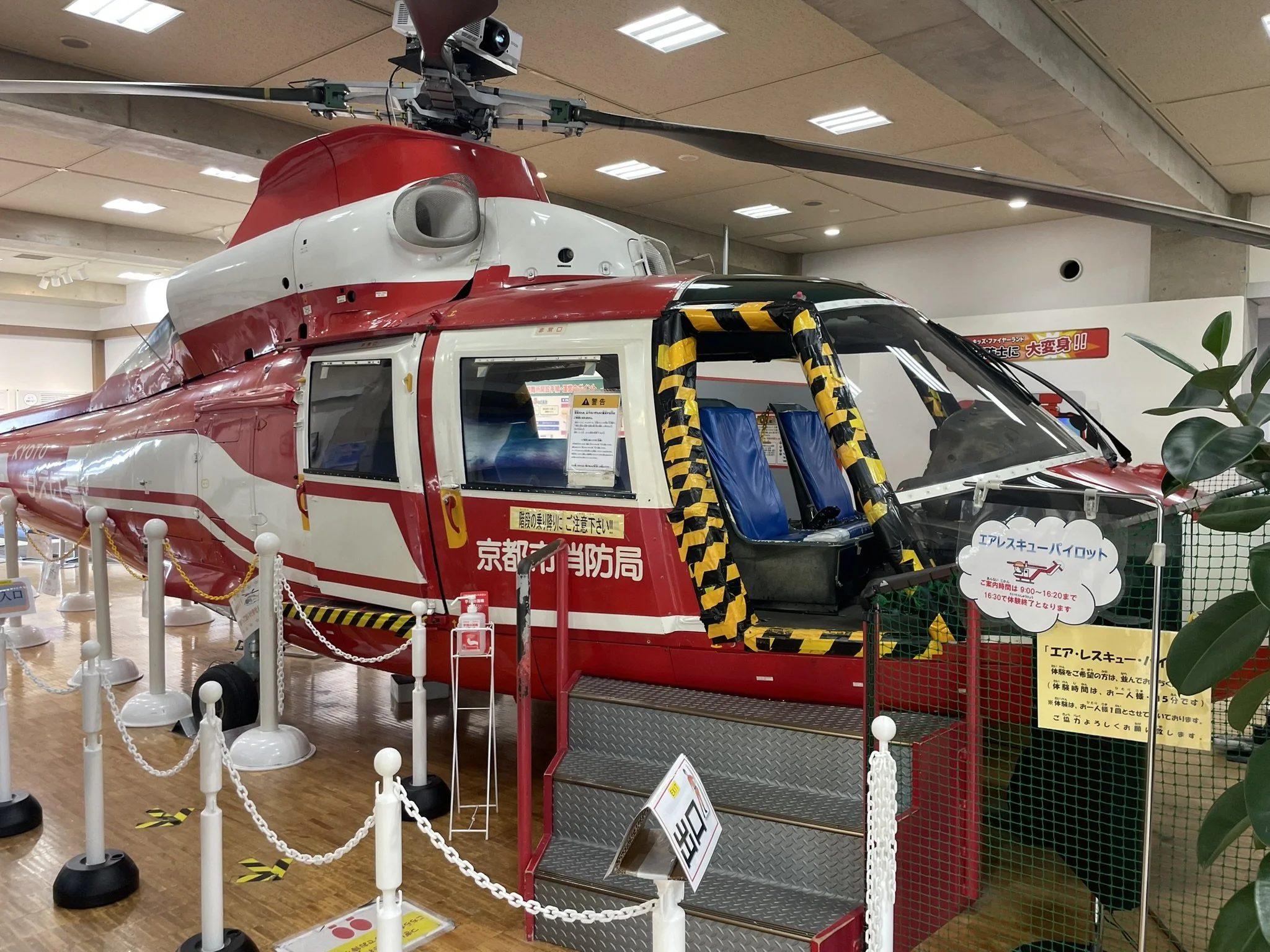
My first stop was the Kyoto City Citizen Disaster Prevention Center.
I walked in without a reservation to learn that different experiences were offered at scheduled times throughout the day.
The facility combined museum exhibits with hands-on opportunities to understand different hazards.
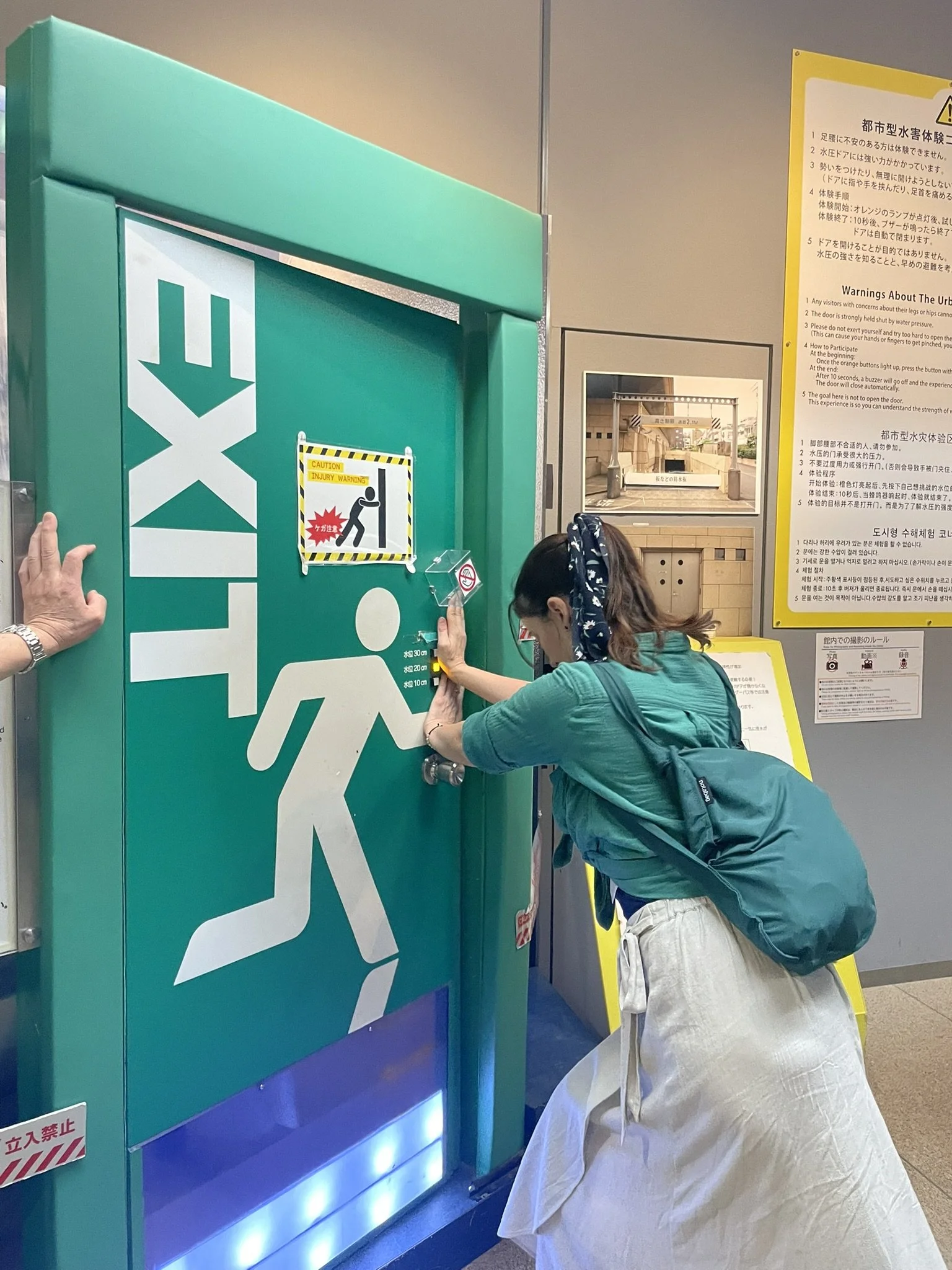
The flooding presentation explored flooding, showing historic local floods near the calm river where I’d enjoyed my breakfast that morning. We were then encouraged to feel the enormous pressure rising water can place against a door, which was sizeable indeed!
Visitors could practice using a fire extinguisher.
There was a smoke-escape experience.
There was even a helicopter.
Fire extinguisher experience, Kyoto City Citizen Disaster Prevention Center
Learning Across Languages
I joined the fire extinguisher and smoke experiences alongside a family with two young girls.
As the only participant who did not speak Japanese, I listened to the presentations through Google Translate on my phone. The translation worked surprisingly well, albeit with a slight delay.
Every so often, the instructor would make a joke.
The parents would chuckle.
A few moments later, Google would deliver the punchline to me. …Then I would laugh.
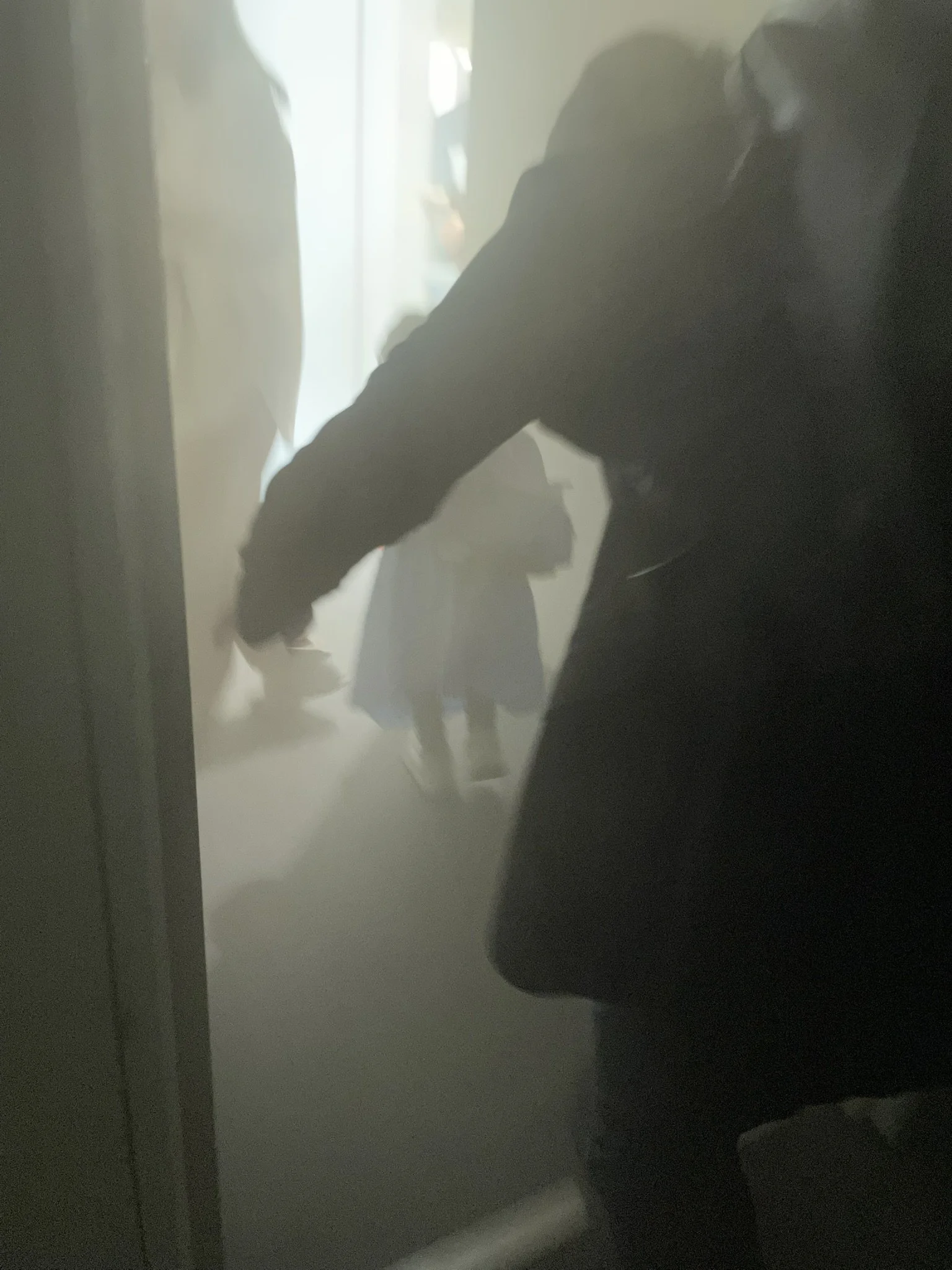
Evacuation experience - Kyoto City Citizen Disaster Prevention Center
Eventually my delayed laughter became another amusement for the group, another reminder that preparedness can be social.
Preparedness education can bring together families.
Coworkers.
Children.
Visitors.
People who do not even share a language.
Who knew that learning about preparedness doesn’t have to be frightening, but instead could be communal, memorable, and perhaps even a bit of fun?
Tokyo: Preparedness on Another Scale
My visit to the Tokyo Fire Department Honjo Disaster Prevention Center was much more structured.
The facility itself is enormous and required a reservation some weeks earlier. I walked in between two large groups of school children who’d come off of tour busses.
The tour began in a theater with a film built around the 1995 Great Hanshin-Awaji Earthquake in Kobe. Children in the story traveled back in time and found themselves helping in the aftermath of the disaster.
I appreciated the premise.
Rather than showing children only as people who need to be protected, the story invited them to imagine themselves as capable participants who could learn useful skills and help others.
From there, we moved through different hazards and skills.
Flooding.
Earthquakes.
Fire.
Smoke evacuation.
Wind and rain.
What Does an Earthquake Feel Like?
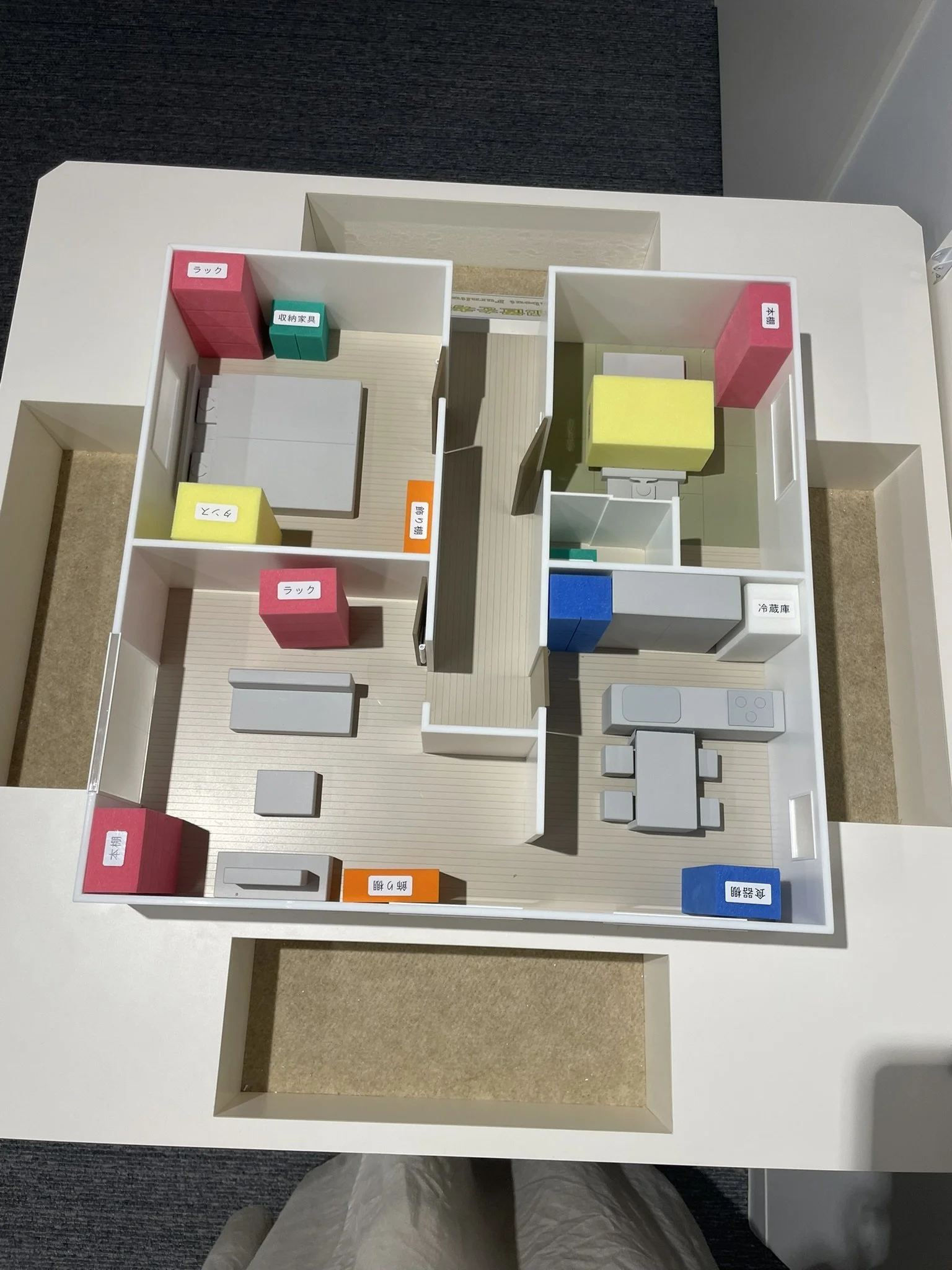
The earthquake simulator was particularly effective because the shaking was paired with different projected environments.
A room with tall furniture.
A grocery store lined with bottles.
Earthquake experience - Tokyo Fire Department Honjo Disaster Prevention Center
The backgrounds made the lesson more concrete, highlighting that an earthquake is not simply the floor moving beneath you, but everything around you is shaking.
Bookcases can fall.
Glass can break.
Objects can become projectiles.
Shelves can empty themselves.
They had us practice basic the protective action I learned as a kid in California:
Drop. Cover. Hold On.
Be a roly-poly! Get low. Protect your head and neck.
Take cover under something sturdy if possible.
Stay away from windows and other objects that can shatter or fall.
Seeing different environments while being physically shaken encouraged an equally useful question: What in this room could hurt me if everything suddenly started moving?
That is exactly the sort of awareness we can practice at home before an earthquake occurs.
Learning by Getting It Wrong
Evacuation - Tokyo Fire Department Honjo Disaster Prevention Center
During the smoke-escape lesson, the instructor asked the group:
“Should I crawl on my hands and knees to escape a fire?”
Wanting to show that I was following along, I confidently announced:
“Hai!” (Yes, in Japanese)
“NO!” Was the instructor’s immediate response.
Excellent, I thought. At least I contributed.
The instructor explained that getting down onto the floor can expose you to hazards such as broken glass. Instead, our lesson emphasized staying low enough to avoid the worst smoke while using the wall to help guide you toward an exit.
I answered incorrectly, but I can assure you: I will never forget that smoke evasion maneuver, which I now lovingly refer to as The Tokyo Shuffle.
It was a wonderful example of why practice is so valuable.
Mistakes made safely during training become lessons we carry into the moments when they truly matter.
Preparedness Is More Than an Emergency Kit
What impressed me just as much as the simulations was everything surrounding them.
There were rooms dedicated to first-aid education.
Displays showed emergency supplies and preparedness resources.
Preparedness was not presented as one bag of supplies sitting forgotten in the back of a closet.
It was presented as a set of practical capabilities.
How do you respond when the ground starts shaking?
How do you move safely through smoke?
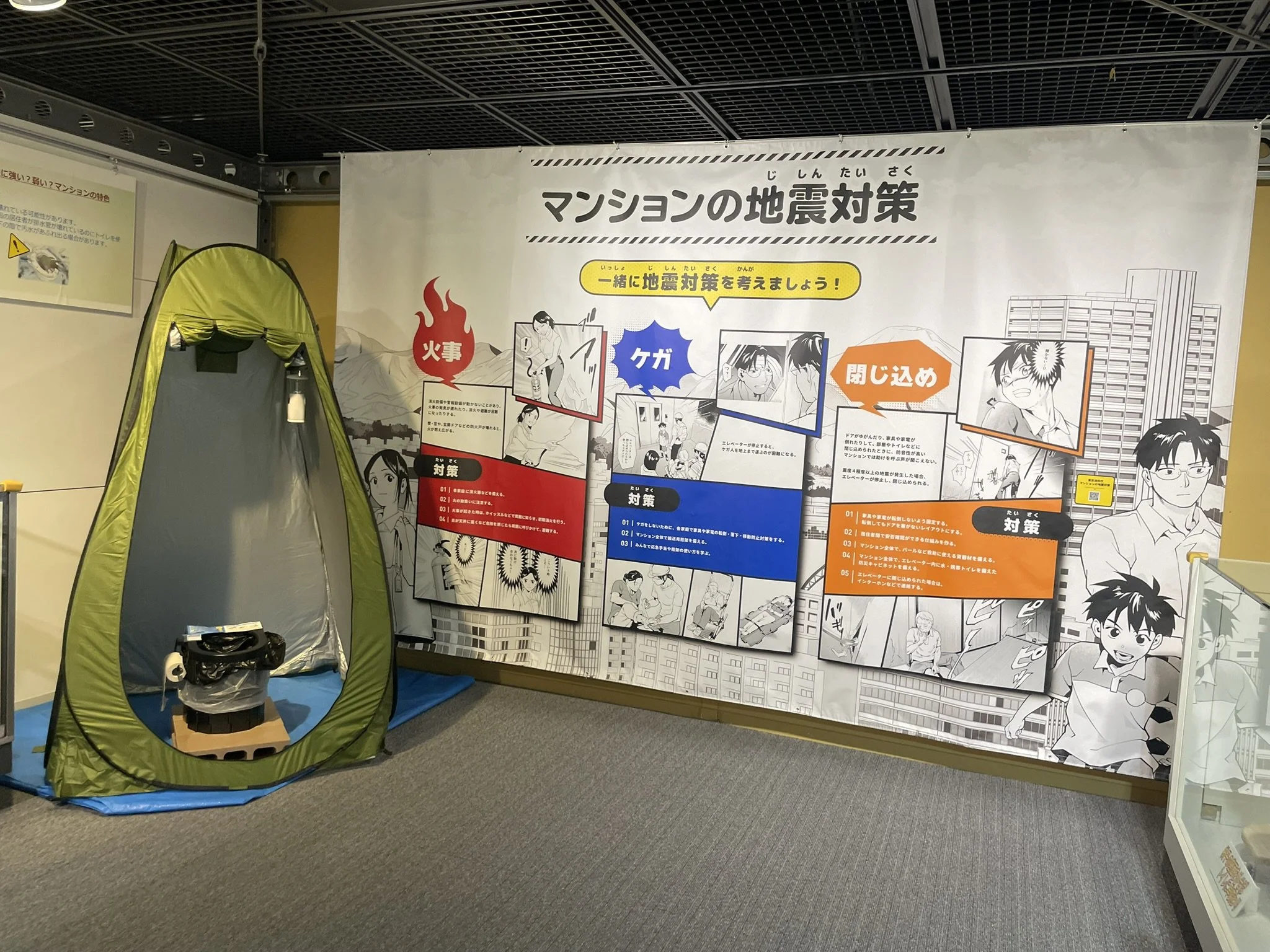
How do you manage basic sanitation when infrastructure is disrupted?
There was also something surreal about experiencing all of this in Tokyo that day.
A severe typhoon was approaching Japan and I was scheduled to fly home that afternoon.
So while I was learning about earthquakes, flooding, fire, and extreme weather inside the safety of a disaster-preparedness center, there was a very real weather system developing outside.
It made the experience feel less theoretical.
Preparedness is easy to think of as something we do for some distant future emergency. But sometimes the hazard is already on the forecast.
And then, appropriately enough, it was time for the rainstorm simulation.
And Then There Was the Rainstorm
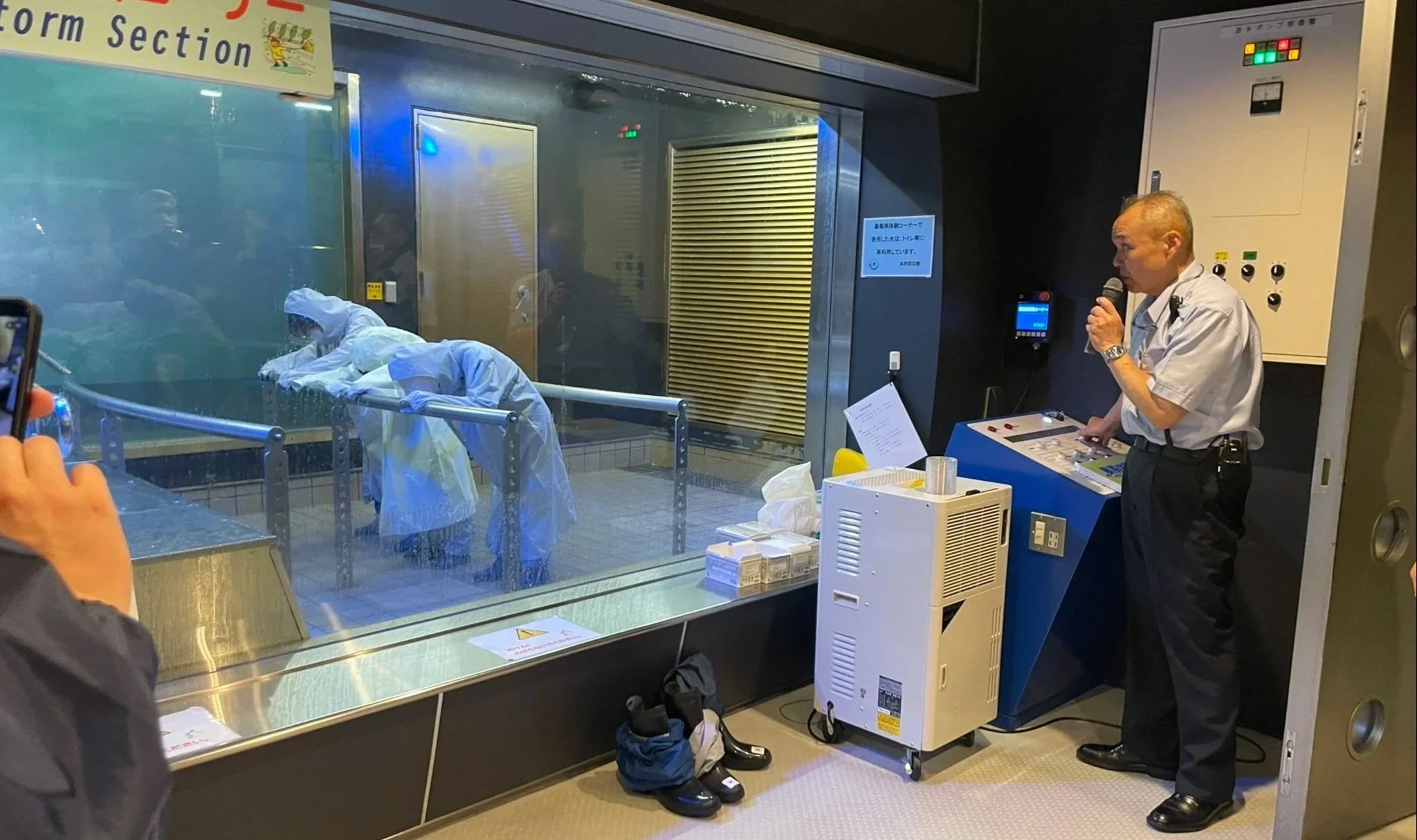
One of the Tokyo simulations demonstrated extreme wind and rain.
The Rainstorm Experience can produce rainfall at approximately 50 millimeters per hour combined with winds of roughly 67 miles per hour.
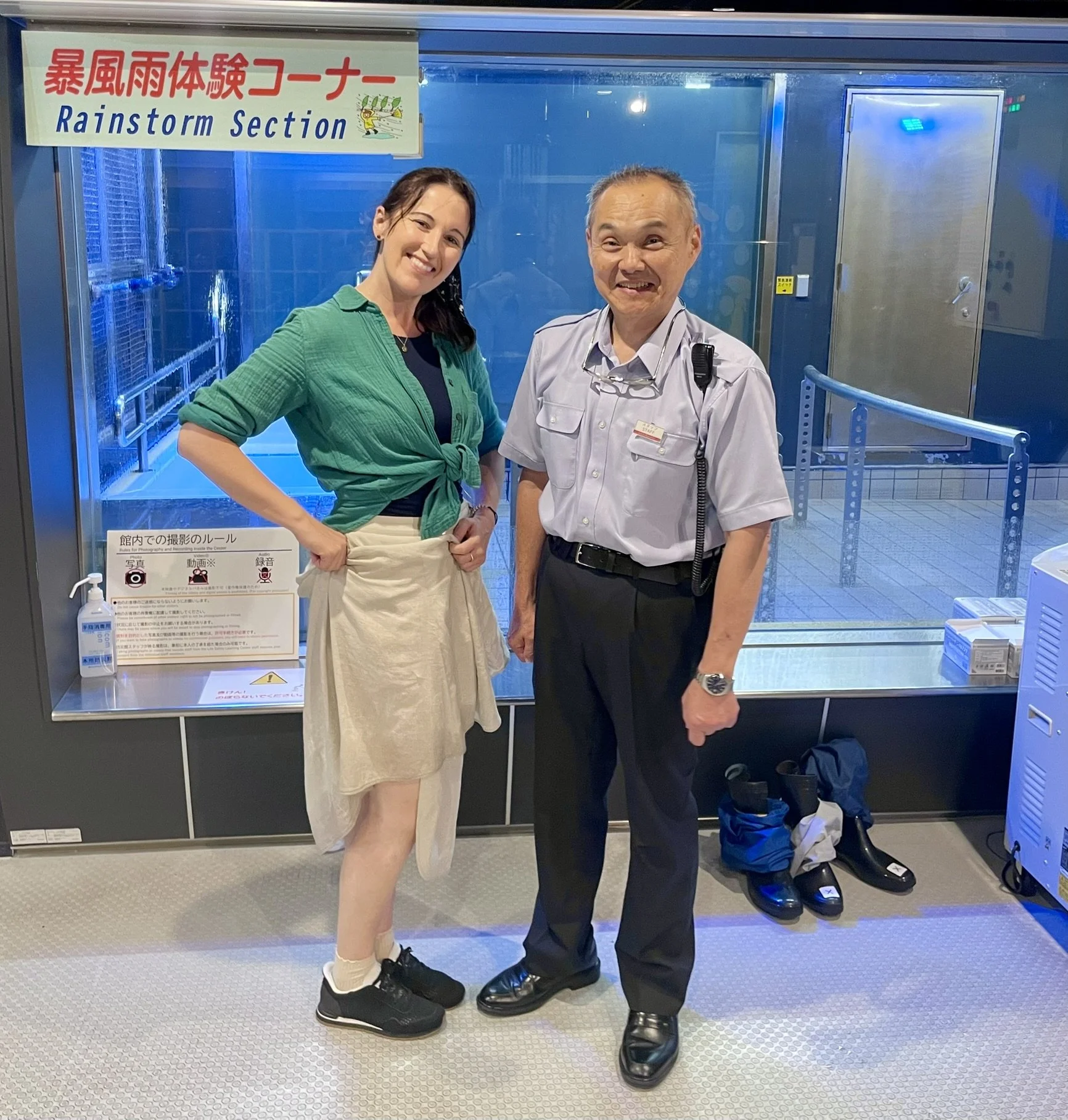
Rainstorm experience - Tokyo Fire Department Honjo Disaster Prevention Center
Before entering, we were outfitted in protective gear, including heavy hooded raincoats and large rubber boots, everything that is required to keep water out, or so I thought.
Once the rain and wind started, the reason for all that protective gear became apparent.
The water came horizontally in sheets, the wind whipping the rain jacket every which way around my body.
After the storm subsided, I recognized there had been a complication.
I was wearing a skirt, and the experience had quite clearly been designed with pants in mind. By the end, the entire bottom of skirt was soaked.
It was hilarious and more immersive than I’d planned for. Everyone had a good laugh, and the cool water provided relief from the heat on my walk back to the hotel.
What If Preparedness Were Fun?
This question has stayed with me after returning home.
What if communities had an inviting place where families could experience local risks in a controlled environment?
Where learning about hazards felt less like receiving a warning and more like acquiring a useful life skill?
And what if those places were enjoyable enough that people wanted to visit?
Japan reminded me that serious subjects do not always require solemn teaching.
You can respect the devastating consequences of disasters while making preparedness engaging.
In fact, enjoyment may help people remember what they learn.
Practically Prepared, One Experience at a Time
People have asked me what the biggest preparedness lesson I carried home from Japan was.
Kyoto City Citizen Disaster Prevention Center
It was capability.
Try the fire extinguisher.
Practice your evacuation route.
Talk through your household emergency plan.
Give your future self the enormous gift of having done something once before.
Because when a disaster happens, professional responders may be doing everything they can, and still be unable to reach everyone immediately.
The goal is not to become an expert.
The goal is to know enough to protect yourself, help the people around you, and take the next useful action.
A checklist can tell you what to do.
Practice helps teach you how to do it.
And capability turns preparedness from a collection of supplies into resilience.
As the saying reminds us: Preparedness alleviates concerns.
That is what being practically prepared is all about.
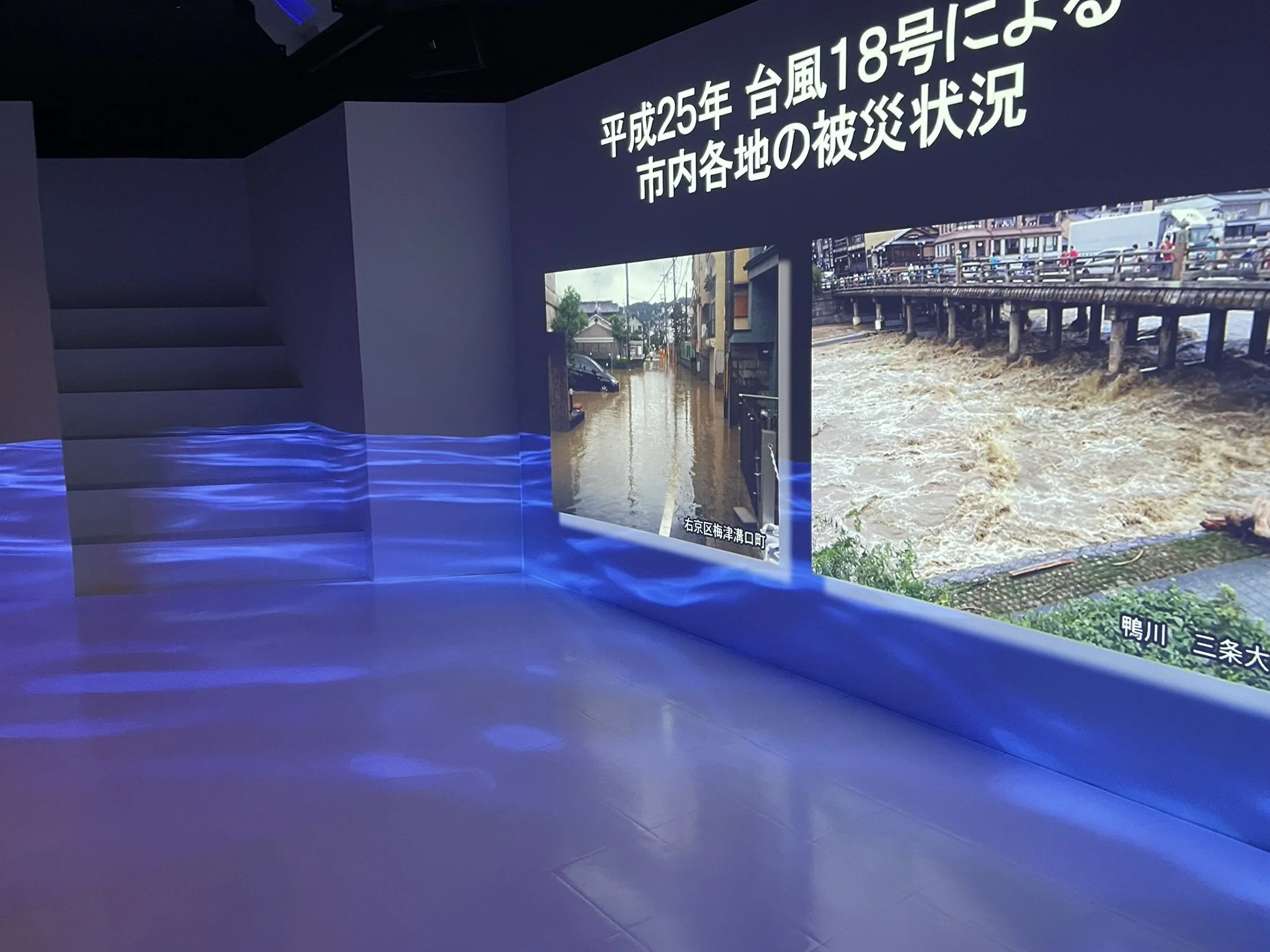
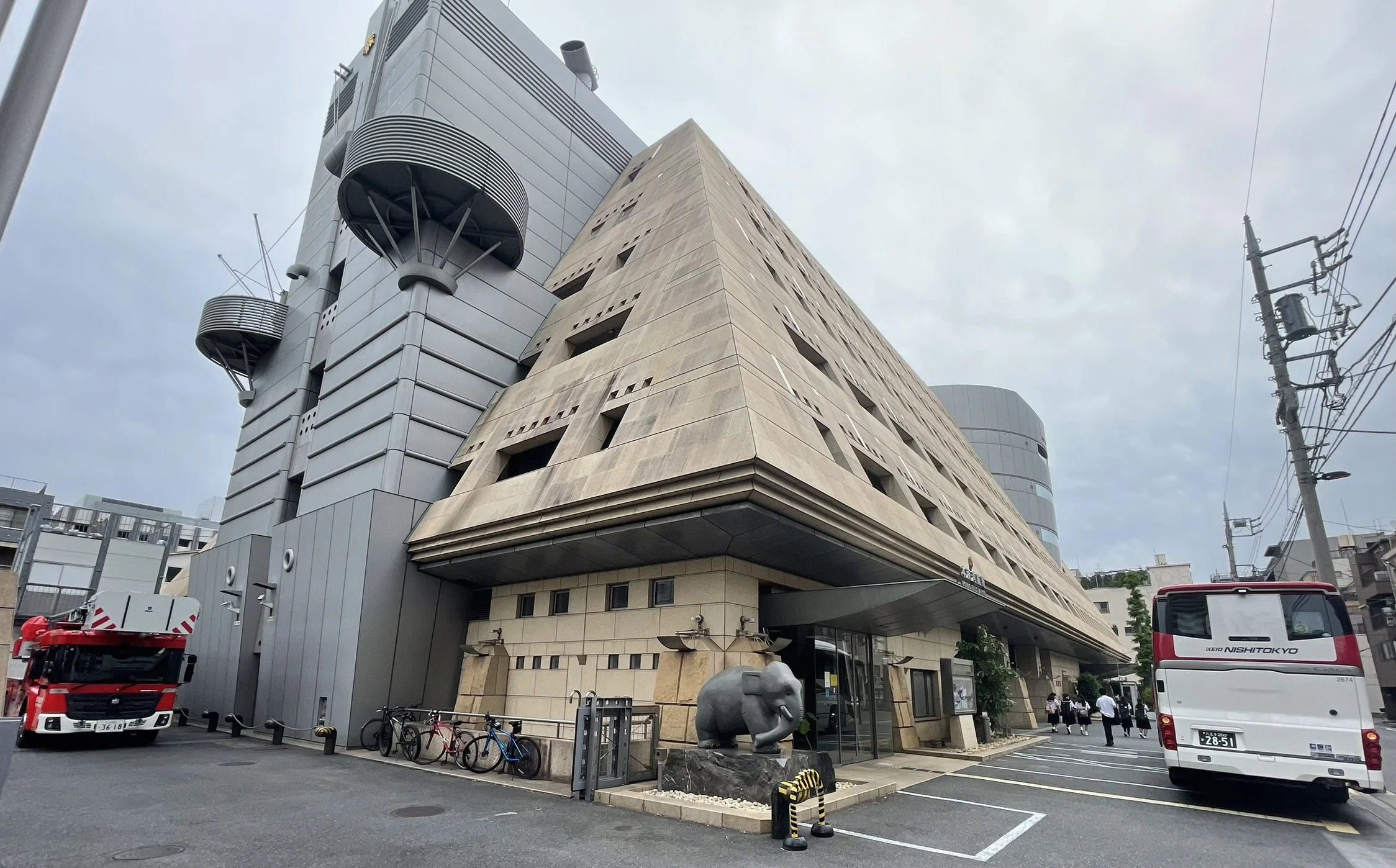
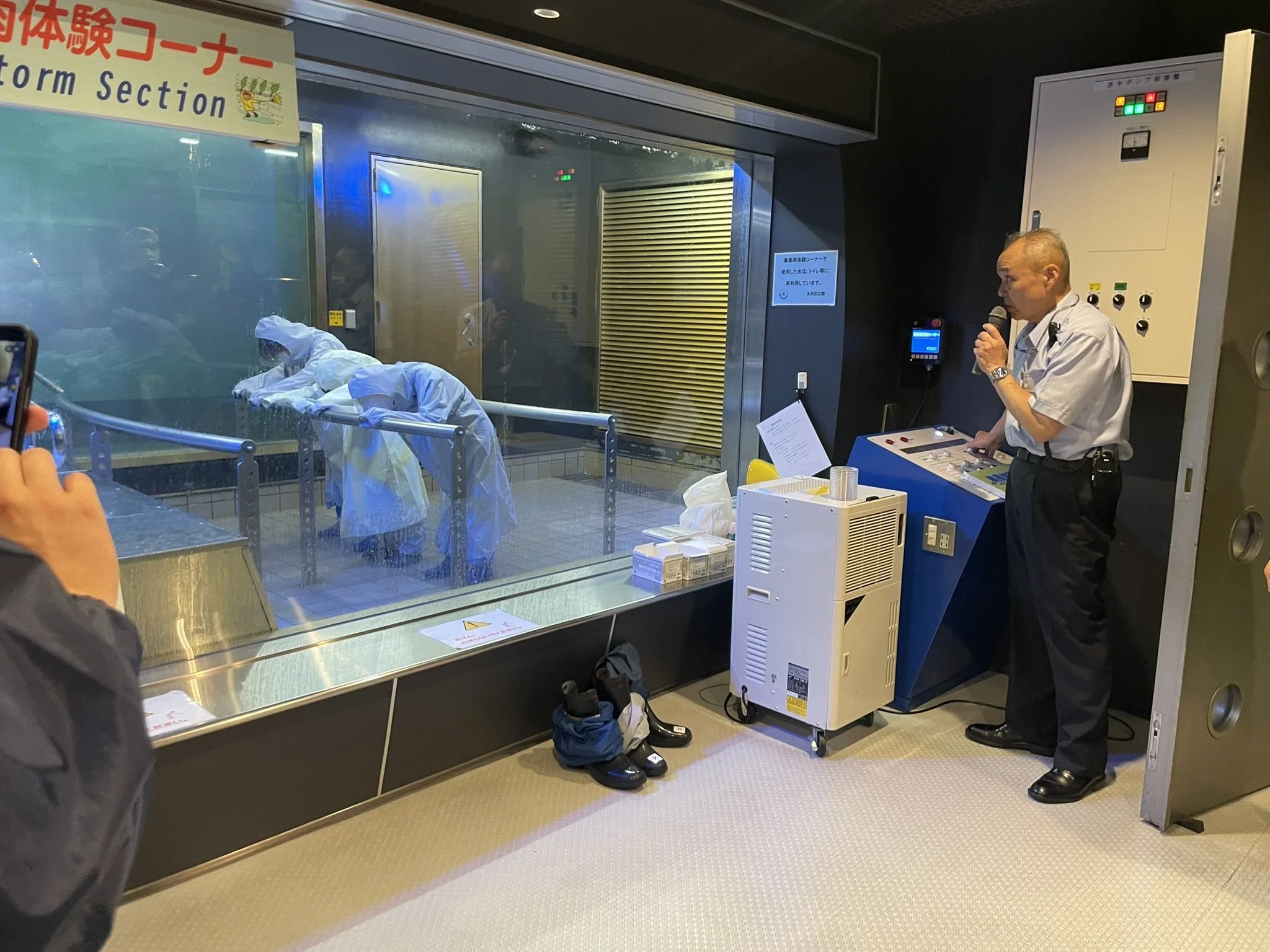
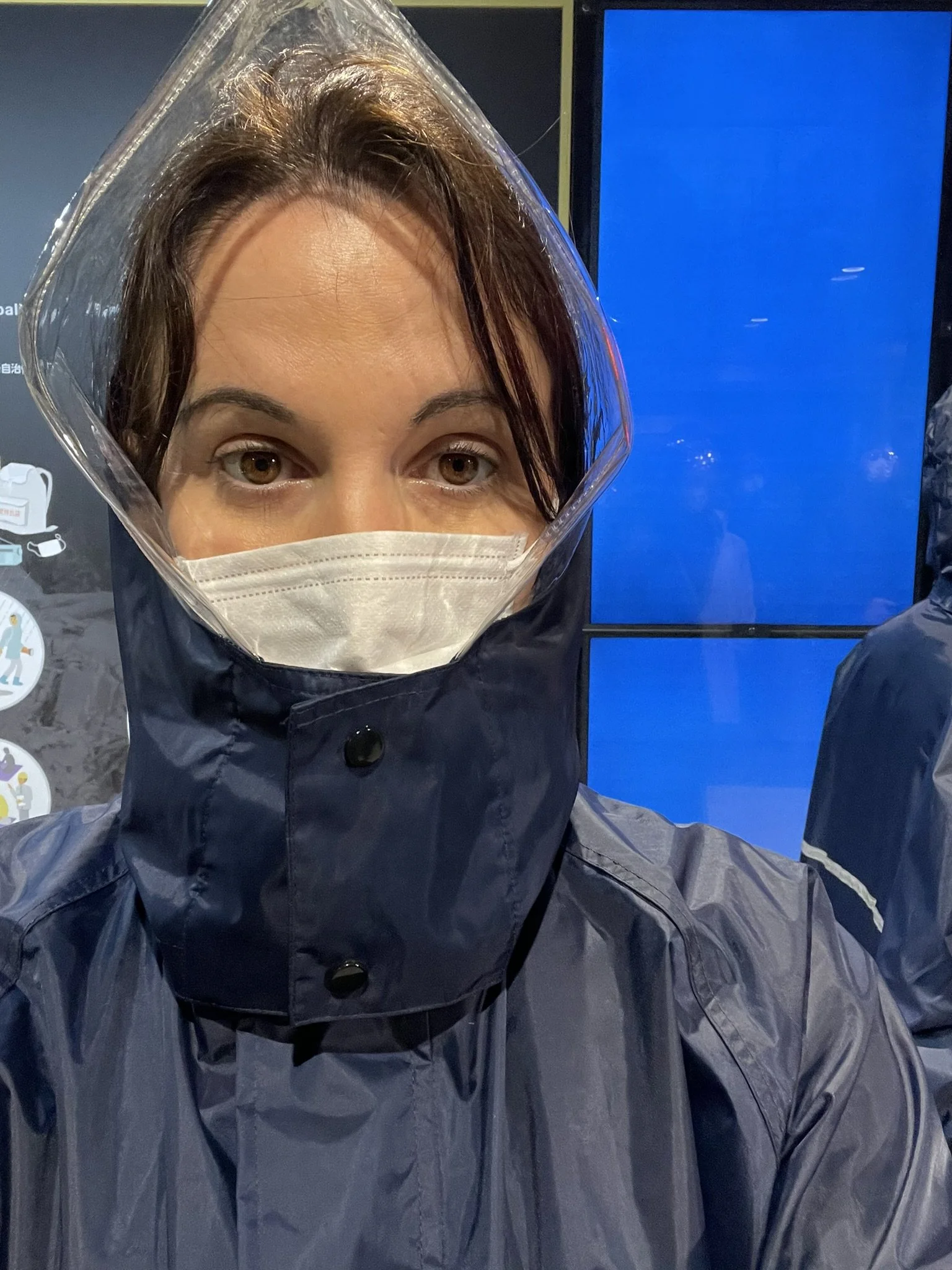
Rainstorm experience - Tokyo Fire Department Honjo Disaster Prevention Center
Explore More of the Journey
These are only some memories from my joyful journey through Japan. Visit the series hub to follow the route on the interactive map and explore more reflections on joy, friendship, preparedness, place, and the KonMari Method®.
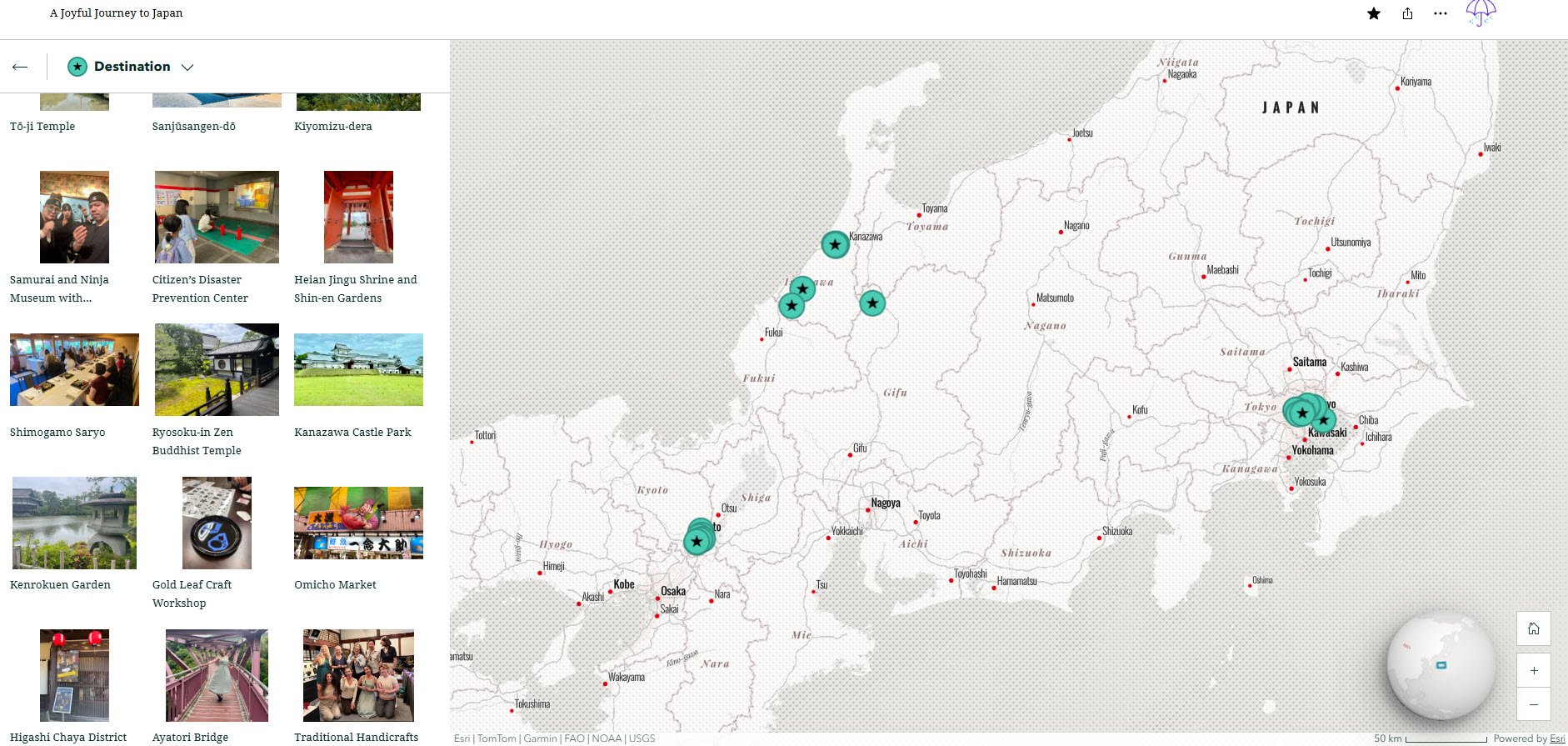
A joyful guide to Japan combining mapped places, cultural discoveries, KonMari experiences, personal stories, and practical inspiration for your own journey.